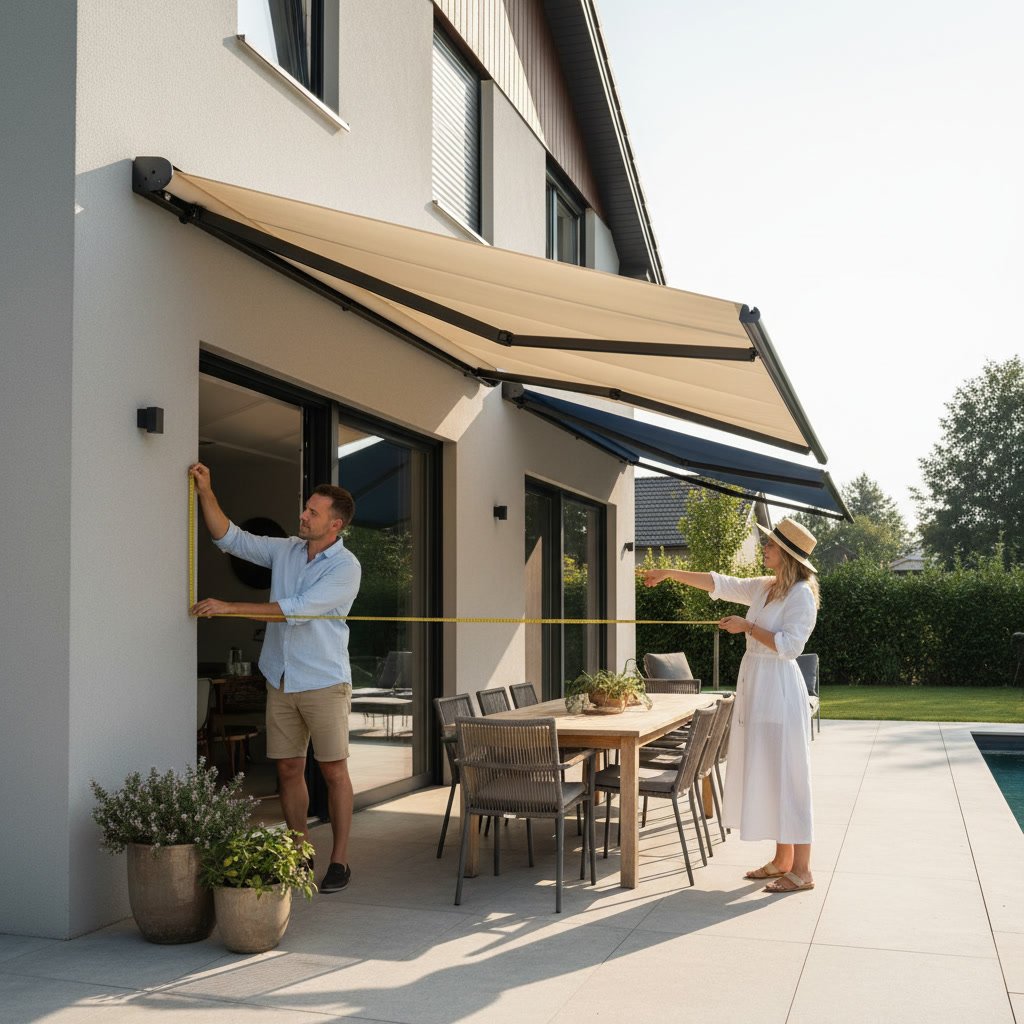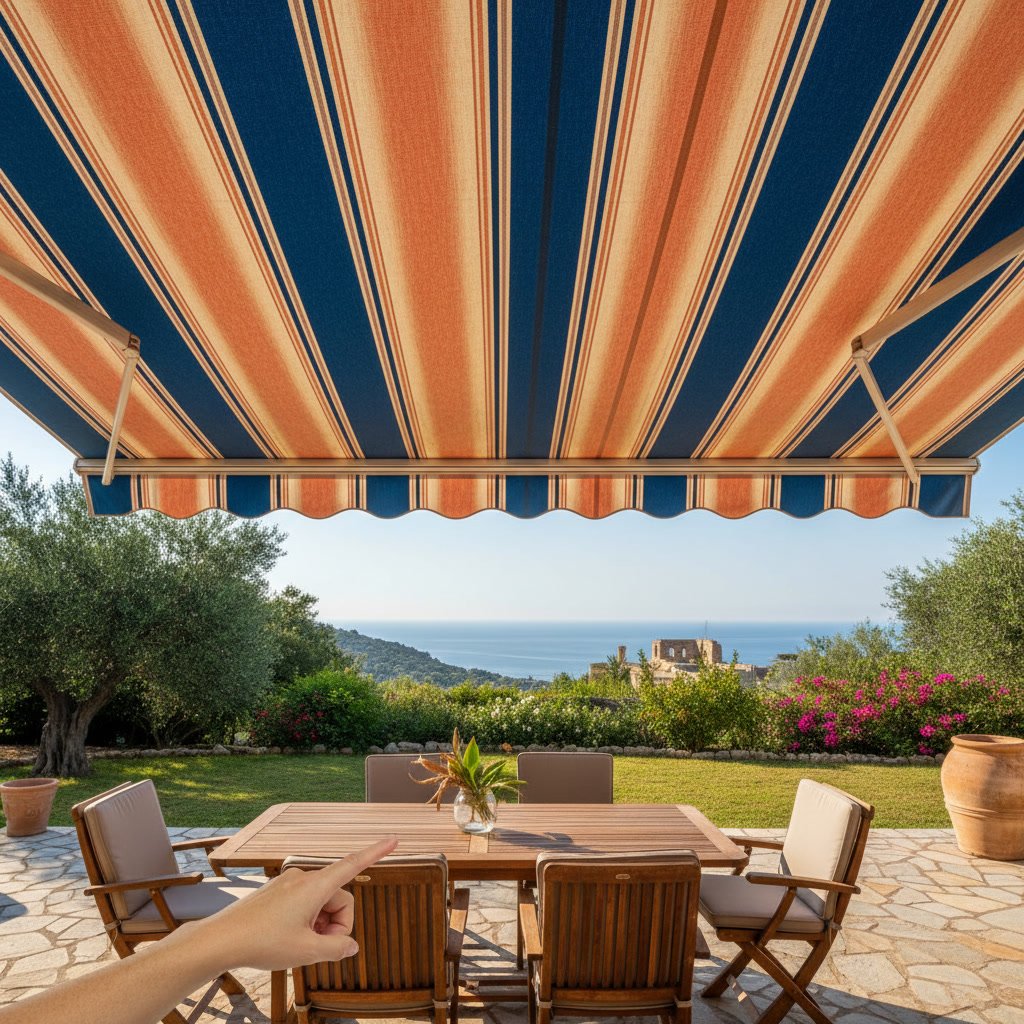
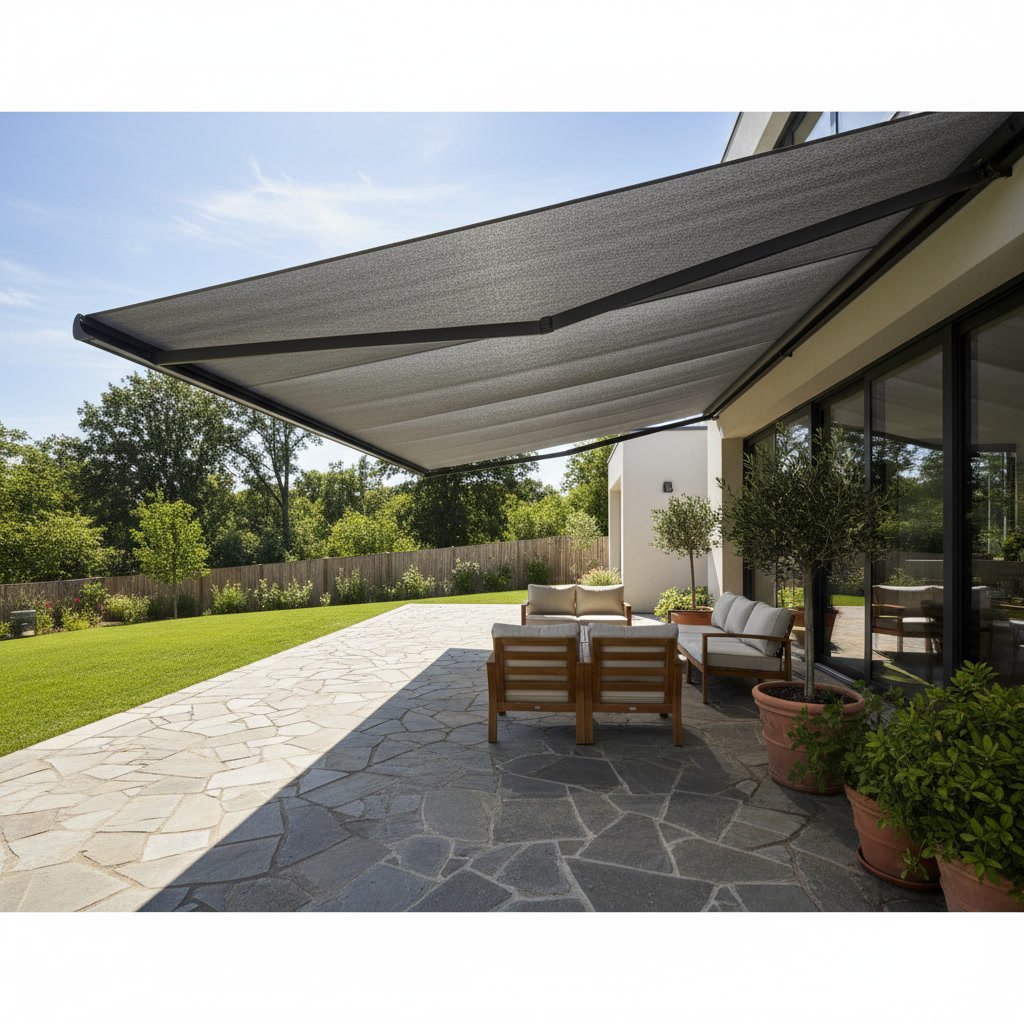
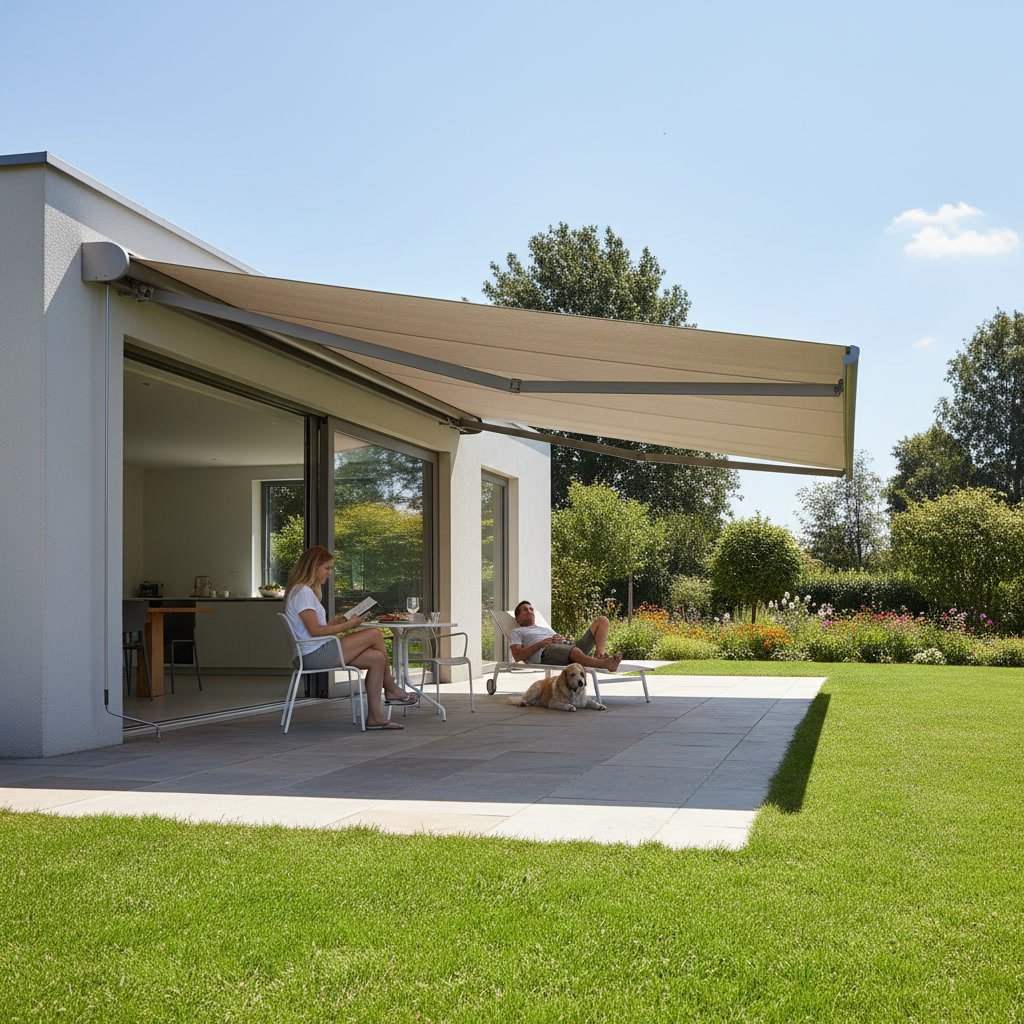
Retractable awning projection is the horizontal distance from the mounting wall to the front edge of the awning when fully extended. This measurement, combined with your awning’s width and mounting height, determines exactly how much shade lands on your patio or deck at any given time of day. Understanding projection helps you avoid undersized installations that leave half your space in the sun or oversized systems that block views and cost more than necessary.
Why Projection Distance Matters More Than Width
Most homeowners naturally focus on width when sizing an awning because it is visible and easy to picture. A 20-foot-wide awning sounds impressive, but if it only extends six feet from the wall, it will leave most of your deck exposed when the sun is high. Projection controls depth of coverage, and depth is what keeps you comfortable during midday hours when the sun sits nearly overhead.
A patio that measures 12 feet deep needs a projection close to that measurement to deliver full afternoon shade. If your space is shallower, you can get away with less projection. If it is deeper or you want coverage that extends past the edge of your hardscape, you need more. The key is matching the projection to how you actually use the space, not guessing based on what looks proportional.
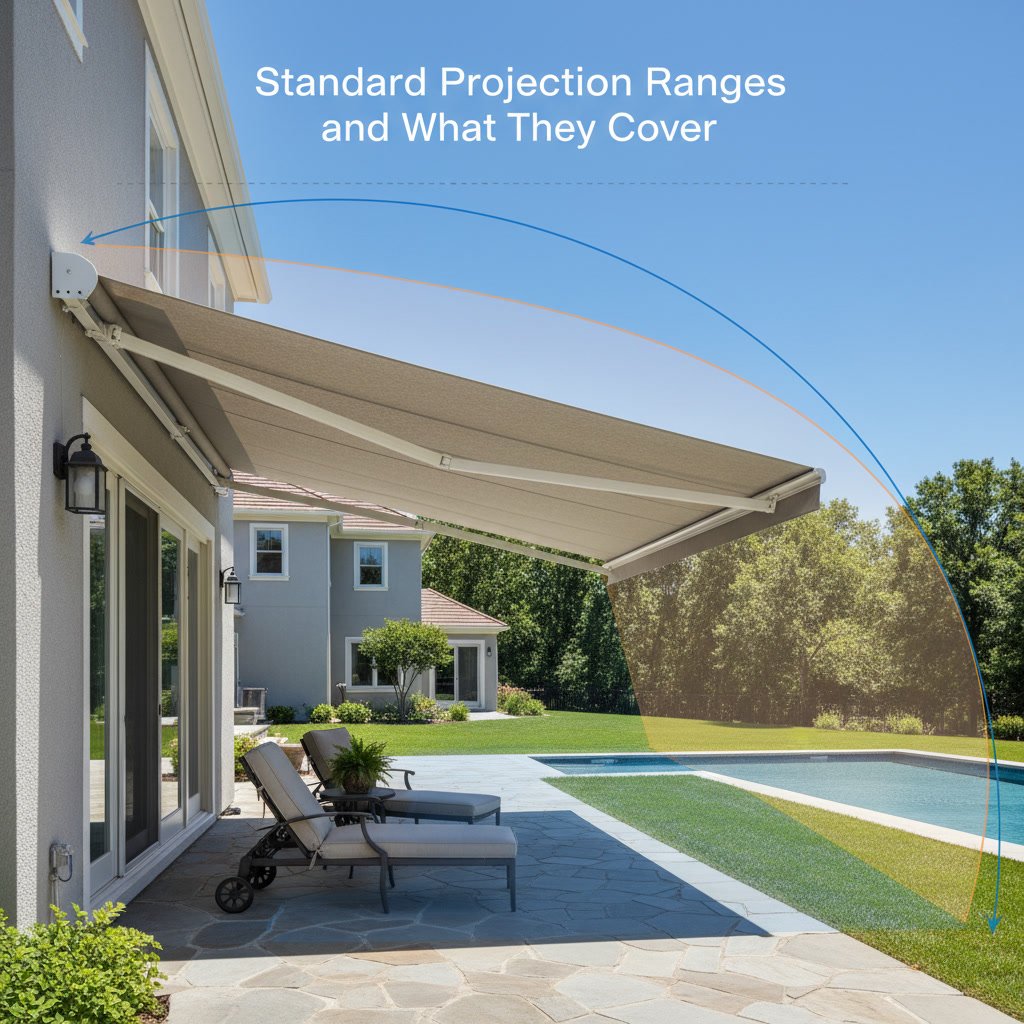
Standard Projection Ranges and What They Cover
Most residential retractable awnings offer projections between eight and 14 feet. Compact models designed for windows or small balconies may project as little as five feet, while large commercial systems can extend 18 feet or more. The standard range for typical deck and patio installations falls between 10 and 12 feet because it balances usable shade with structural load and wind resistance.
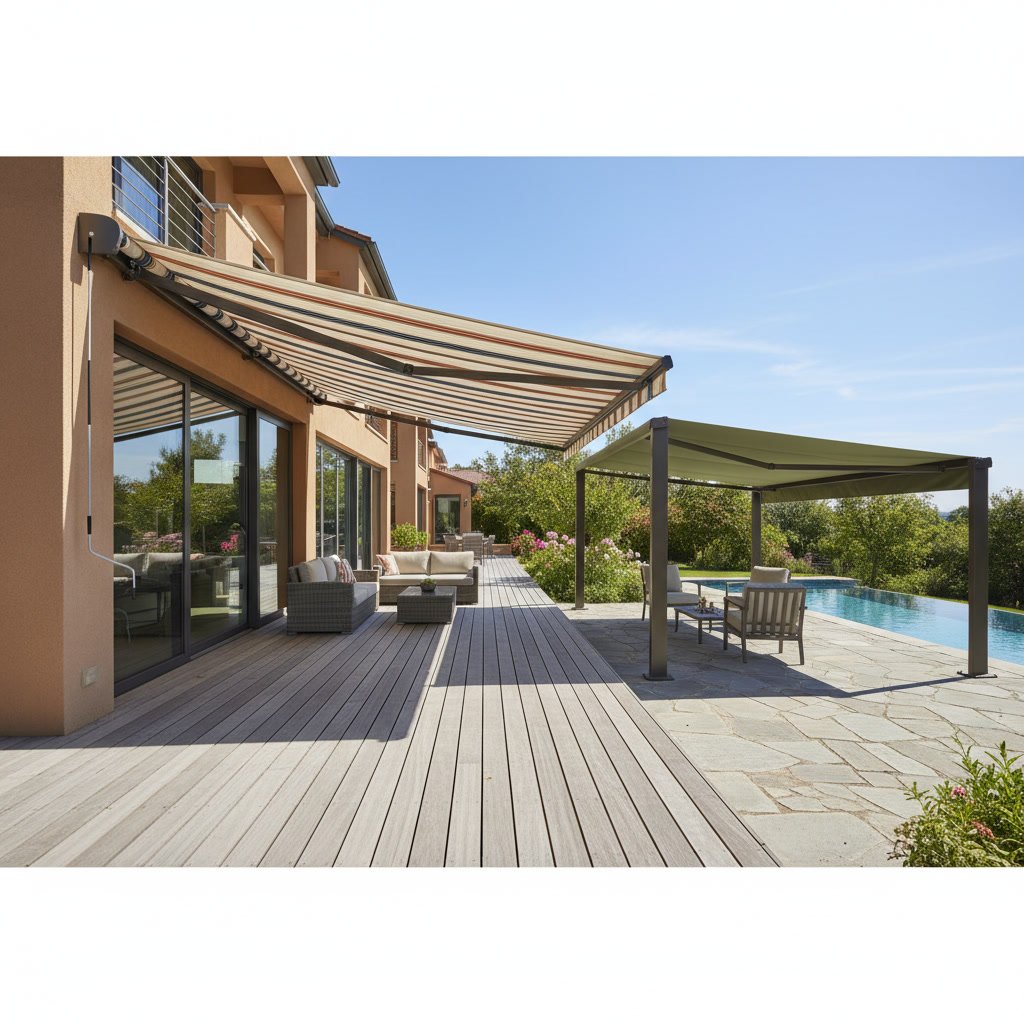
An eight-foot projection works well over narrow spaces like walkways, doorways, or bistro patios where you need overhead coverage but limited depth. A 10-foot projection suits average decks and patios where furniture sits six to eight feet from the house. A 12-foot or greater projection is ideal for deep entertaining areas, poolside lounges, or spaces where you want the awning to reach past the patio edge and shade adjacent lawn or plantings.
How Sun Angle Changes Coverage Throughout the Day
Projection is a fixed dimension, but shade coverage shifts constantly as the sun moves across the sky. In early morning and late afternoon, the sun sits low on the horizon, and even a modest projection can cast a long shadow. At noon during summer months, the sun climbs nearly straight overhead, and you need every inch of projection to push shade out from the wall.
This is why mounting height matters as much as projection distance. An awning mounted eight feet high on a wall will cast a shorter shadow at noon than the same awning mounted 10 feet high, even though the projection is identical. The higher the mount, the more vertical clearance you gain, but the steeper the angle becomes for blocking overhead sun. For most installations, a mounting height between nine and 11 feet strikes the right balance.
Calculating the Shade Footprint for Your Space
To estimate how much ground your awning will shade, start with the projection measurement and add or subtract based on sun angle. At solar noon in mid-summer, expect the shade line to fall roughly equal to the projection distance. In spring and fall, when the sun sits lower, shade will extend a few feet farther. In winter, projection becomes less critical because the sun is low enough that even a shallow awning provides good coverage.
If your goal is to shade a dining table that sits 10 feet from the house, you need at least 10 feet of projection to keep it covered during lunch. If you want to shade a seating area 12 feet out, plan for 12 feet or more. Do not rely on the awning to cover spaces significantly beyond its projection unless you are only using it in early morning or late evening.
Common Sizing Mistakes in Annapolis and the Eastern Shore
One frequent error is choosing projection based on the existing roofline or gutter rather than the actual space below. A homeowner sees 10 feet of clearance from the wall to the deck edge and assumes a 10-foot projection is perfect, but they forget to account for furniture placement. Chairs and tables often sit two to three feet in from the edge, leaving them in full sun even when the awning is deployed.
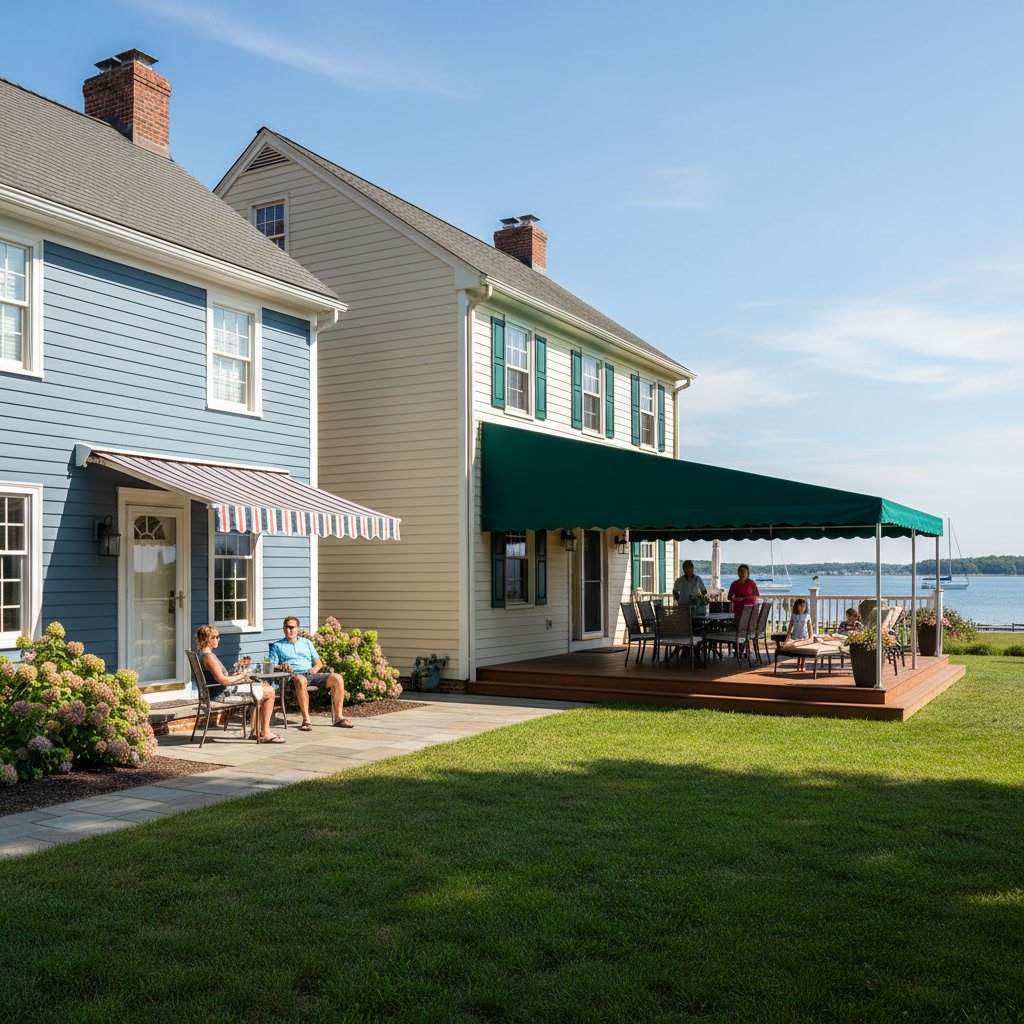
Another mistake is underestimating wind exposure. Properties near the water in Annapolis and across Kent Island face stronger gusts than inland locations. Larger projections create more sail area and higher wind load on the mounting hardware and frame. If your site is exposed, you may need to size down slightly or choose a model with wind sensors and automatic retraction to prevent damage.
Balancing Projection With Structural Limits
Not every wall can support a 14-foot projection. The farther the awning extends, the greater the leverage force on the mounting brackets. Older homes with brick veneer, stucco over foam board, or vinyl siding may require additional reinforcement or alternative mounting solutions. Before committing to a specific projection, have someone evaluate your wall structure and confirm it can handle the load.
Roof pitch and overhang also affect what projection is practical. If your roofline extends three feet past the wall, you lose some of that projection to clearance unless you mount the awning at or above the fascia. In those cases, a stationary frame or pergola system may deliver better coverage without the mounting complications.
How Pitch Angle Affects Effective Projection
Most retractable awnings allow you to adjust the pitch, or slope, of the fabric when extended. A steeper pitch sheds rain better and can block low-angle sun more effectively, but it also reduces the horizontal projection slightly. If an awning is rated for 12 feet of projection at a shallow pitch, increasing the angle to 20 or 25 degrees may cut effective ground coverage by six to 12 inches.
This trade-off matters if you live in an area with frequent afternoon showers and want the awning to do double duty as rain protection. A steeper pitch keeps water from pooling on the fabric, but you may need to add a foot of rated projection to compensate for the angle and still achieve your target shade depth. Understanding how retractable awnings work mechanically helps you make informed decisions about pitch and projection together.
Width and Projection Together Define Total Coverage
Width determines how much of your wall the awning spans, while projection determines how far that coverage reaches into the yard. A 16-foot-wide awning with eight feet of projection covers 128 square feet. A 12-foot-wide awning with 12 feet of projection covers 144 square feet. The second option is narrower but provides more total shade because projection contributes more to usable coverage in most residential layouts.
If you have a long, shallow patio, prioritize width. If you have a square or deep patio, prioritize projection. If your budget forces a choice between the two, measure where you spend the most time and which dimension will keep that area shaded during peak heat hours.
When to Choose a Shorter Projection
Not every situation calls for maximum projection. A shorter extension makes sense if your outdoor space is narrow, if you need to preserve sightlines to a view, or if local wind conditions make a deep awning impractical. Homeowners who use their patio primarily in the morning or evening can often get by with less projection because the sun angle is already favorable.
Shorter projections also retract more compactly and place less stress on the mounting hardware, which can extend the life of the awning and reduce maintenance. If your main goal is window shading rather than patio coverage, a five- to seven-foot projection may be all you need to block direct sun from entering the house.
Custom Projection Options and Special Installations
Some awning manufacturers offer custom projections beyond their standard range, though this usually increases cost and lead time. Custom sizing makes sense when your space has unusual dimensions or when you are replacing an existing awning and want to match the original coverage exactly. Replacement fabric services can also adapt projection if your current frame supports it but you want to adjust how far the fabric extends.
Special installations, such as awnings mounted to pergola beams, freestanding posts, or soffit boards, may allow greater projection because the load distributes differently than a standard wall mount. These setups require careful engineering but can solve problems that a conventional installation cannot address. If you are unsure whether your property can accommodate the projection you want, a site evaluation will clarify what is possible.
Getting the Right Fit for Your Property
Choosing the correct projection is not about picking the biggest number available. It is about understanding how sun, structure, and space work together and then selecting the dimensions that deliver the coverage you need without creating problems you do not. Measure your patio depth, note where furniture and activity areas sit, and consider what time of day you use the space most. Those factors will point you toward the right projection range.
A properly sized awning transforms a patio from a space you avoid during summer afternoons into one you use daily. Undersized systems leave you disappointed, and oversized systems cost more and create unnecessary wind load. The goal is a setup that matches your property and your habits, not a generic recommendation pulled from a catalog.
Awning2Go works with homeowners across the Eastern Shore to match projection, width, and mounting details to each property’s specific conditions. Whether you need a compact awning for a narrow deck in Stevensville or a deep-projection system for a waterfront entertaining area, we measure on site and walk you through options that fit your space and budget. Reach out at +14109995607 or visit our contact page to schedule a free consultation and get a straight answer about what will work for your property.