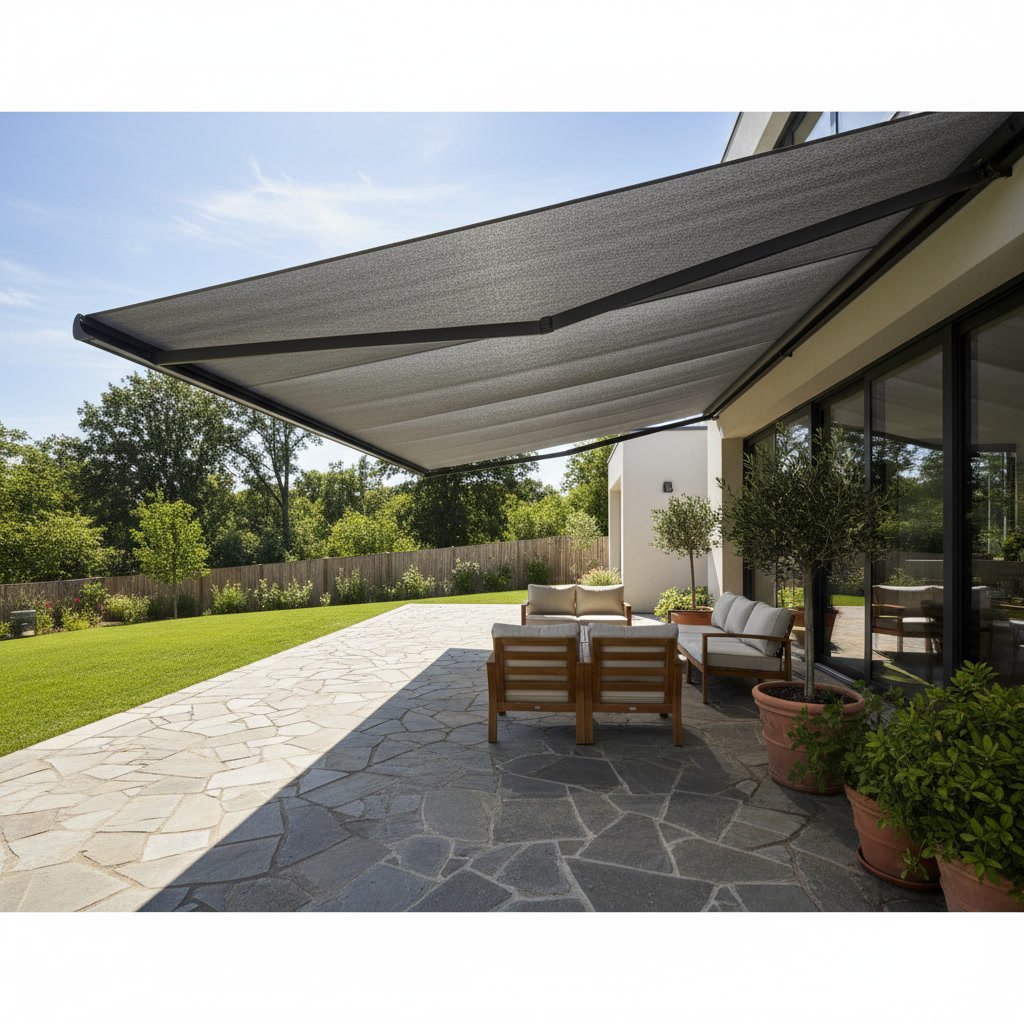
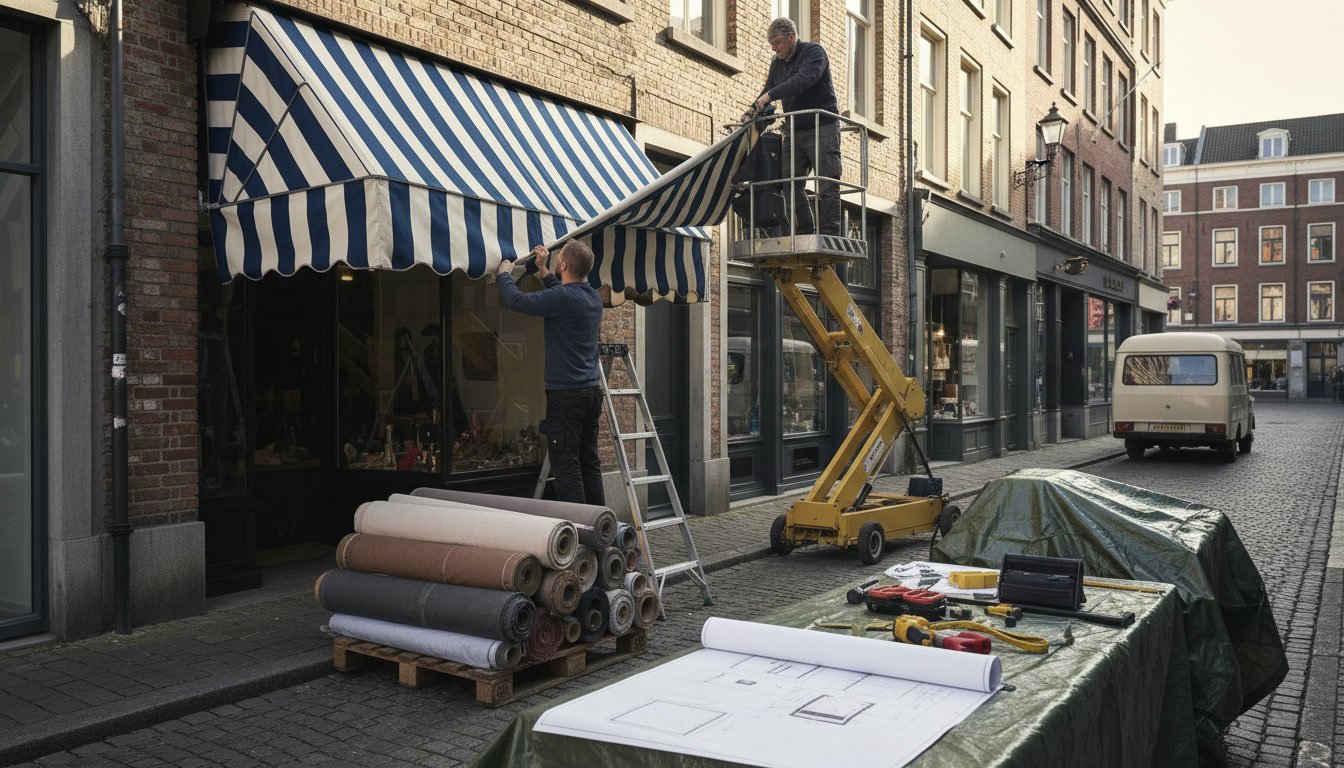
Replacement awning fabric installation starts with accurate measurement of your existing frame, moves through fabric selection and fabrication, and ends with proper tensioning and testing. The process typically takes two to four weeks from initial site visit to completed install, depending on fabric availability and weather conditions. Most awning frames outlast their fabric by many years, making fabric replacement a practical way to restore function and appearance without the cost of a full system replacement.
Why Awning Fabric Wears Out Before the Frame
Metal frames and mechanical components can last 15 to 20 years or longer with proper maintenance, but fabric typically shows wear after seven to 12 years. Sun exposure breaks down fibers and fades color, rain and humidity encourage mildew growth, and wind stress creates small tears that grow over time. The fabric takes the brunt of weather while the frame stays protected underneath. When you start seeing faded stripes, water pooling, or small holes, the frame beneath is usually still sound. Replacing just the fabric gives you years more service from a system that still has good bones.
Coastal areas like Kent Island and the Eastern Shore accelerate fabric wear because of higher UV intensity, salt air, and stronger wind. A frame that might last 25 years can go through two or three fabric replacements during its life. Understanding what affects awning lifespan helps you plan maintenance and budget for future fabric changes.
Assessing Whether Your Frame Can Be Reused
Not every awning is a candidate for fabric replacement. The frame needs to be structurally sound, the motor or manual gear must work correctly, and the mounting hardware has to be secure. Bent arms, rusted brackets, or a motor that no longer responds means you may need a full system replacement instead. A professional inspection looks at arm tension, pivot points, motor function, and frame alignment. If the awning fully extends and retracts without binding or sagging, fabric replacement is usually the right move.
During the site visit, expect questions about how long the awning has been in place, whether it has been repaired before, and any problems you have noticed. Small mechanical issues like worn bushings or loose hardware can often be fixed at the same time the fabric is replaced. The goal is to deliver a system that works like new without replacing parts that still have life left.
Taking Accurate Measurements of the Existing Frame
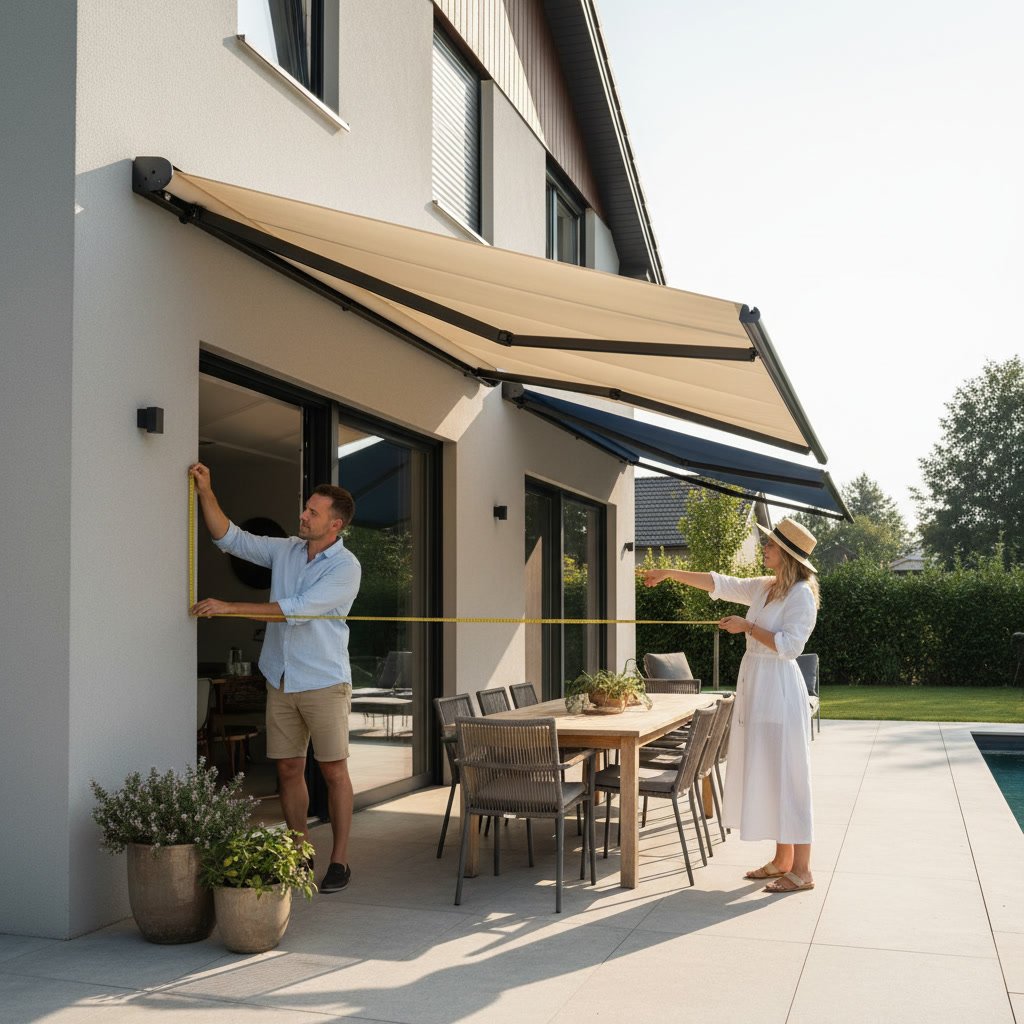
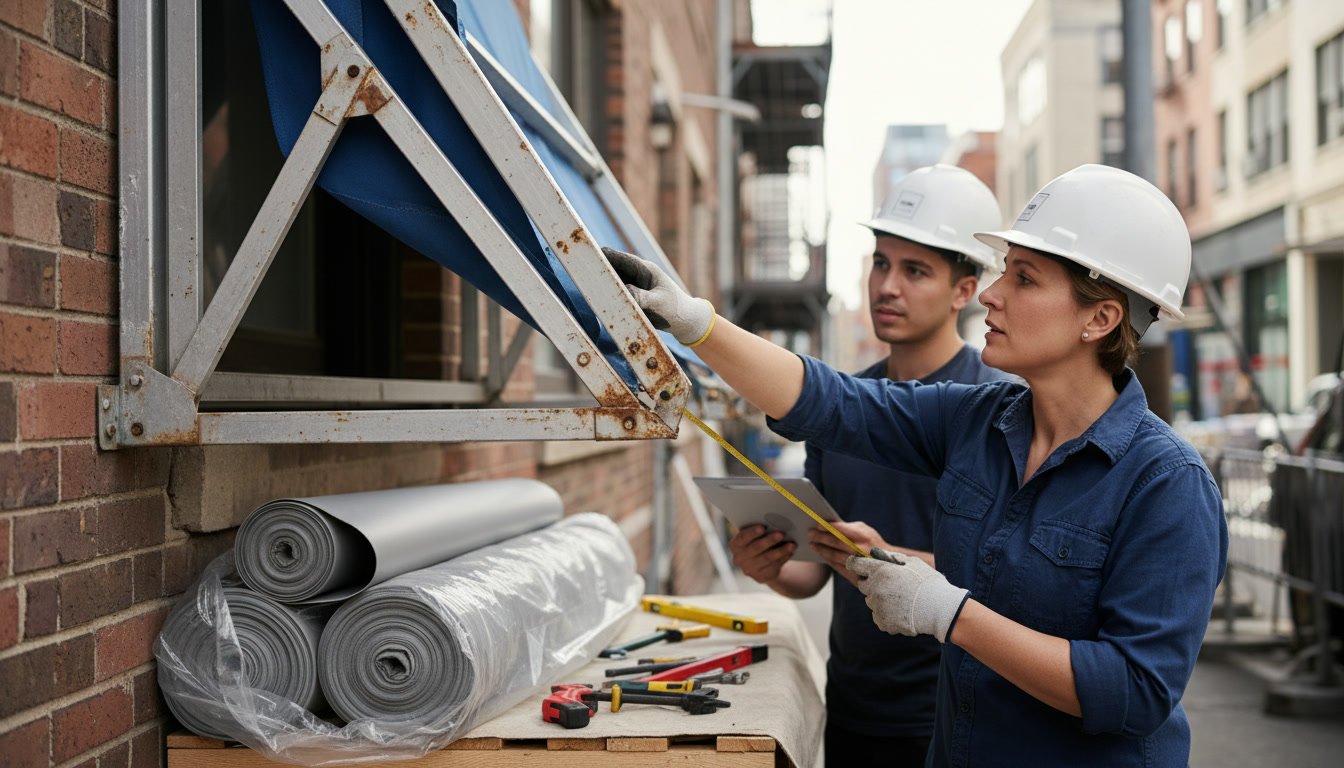
Measurement is the most critical step in the entire process. Fabric that is even an inch too short will not tension properly, and fabric that is too wide will bunch or wrinkle. The installer measures the width of the roller tube, the projection depth from wall to front bar, and the pitch or angle of the awning when extended. For retractable systems, measurements are taken with the awning fully open and level. Stationary frames require measurements across each mounting point and along the frame perimeter.
Frames are not always perfectly square, especially after years of wind loading and seasonal expansion. Installers measure multiple points and take note of any variation. Custom fabric is cut and sewn to match the frame as it actually sits, not as the original spec sheet says it should be. This attention to real-world conditions is what separates a tight, professional installation from one that sags or gaps.
Choosing the Right Fabric for Your Environment in Annapolis and Beyond
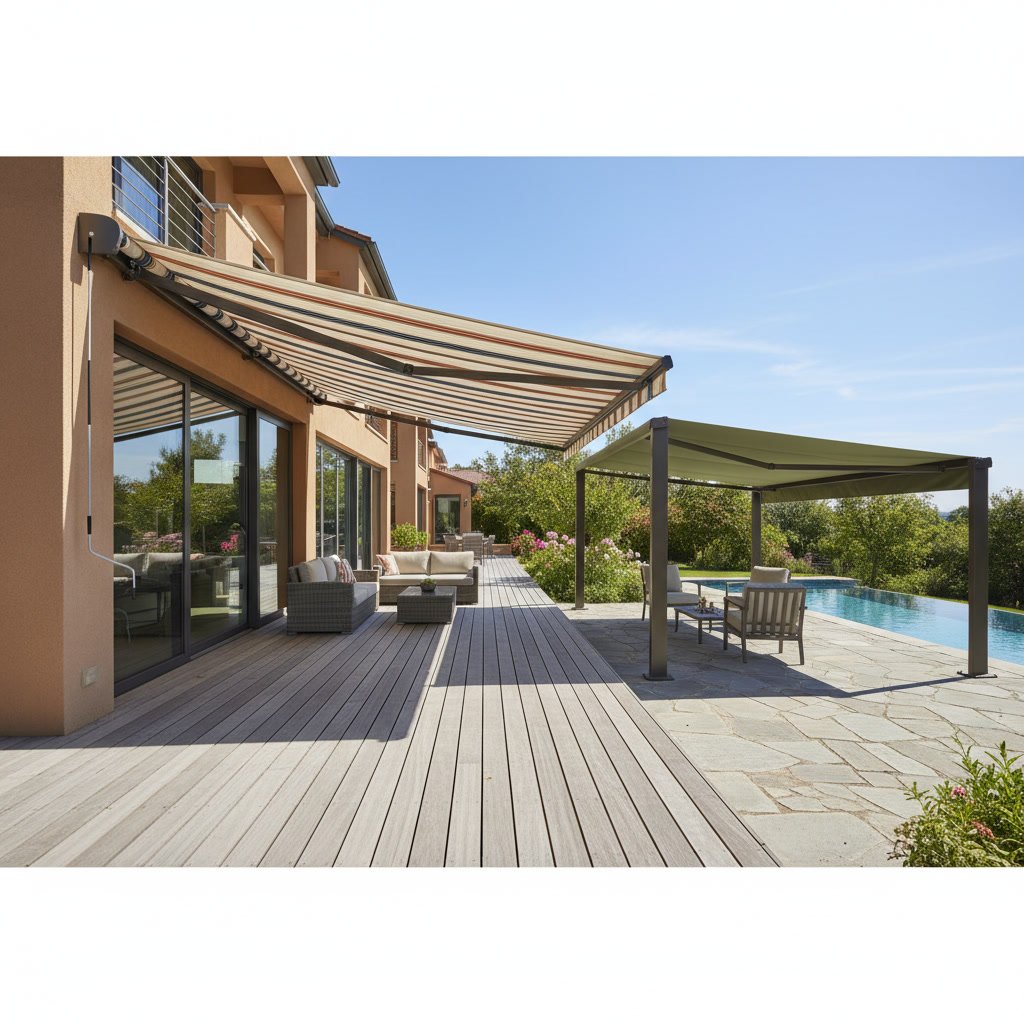
Fabric selection affects how long the replacement will last and how well it performs. Solution-dyed acrylic is the standard for most residential awnings because it resists fading, sheds water, and breathes enough to prevent mildew. Vinyl-coated fabrics offer complete waterproofing but trap heat and do not breathe, making them better for commercial storefronts than home patios. Mesh fabrics allow airflow and reduce wind load, which matters in exposed locations near the water.
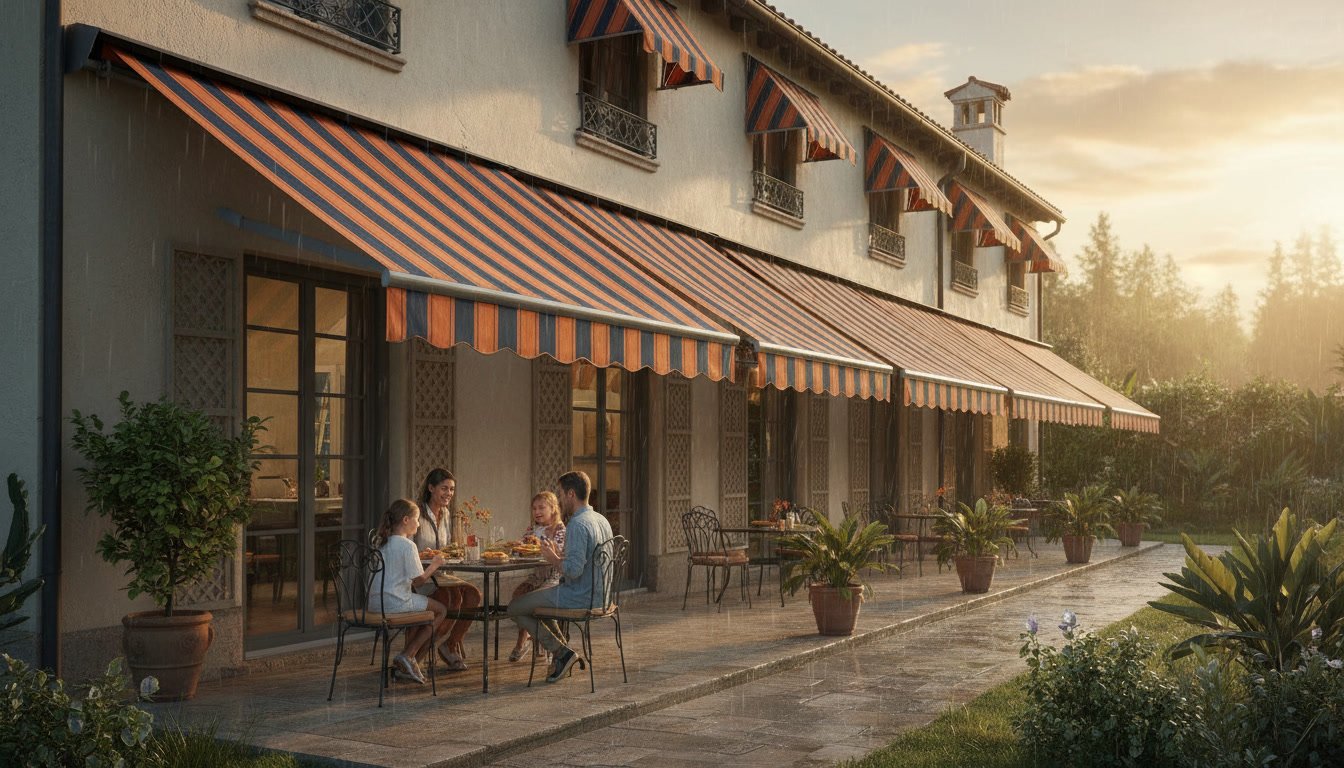
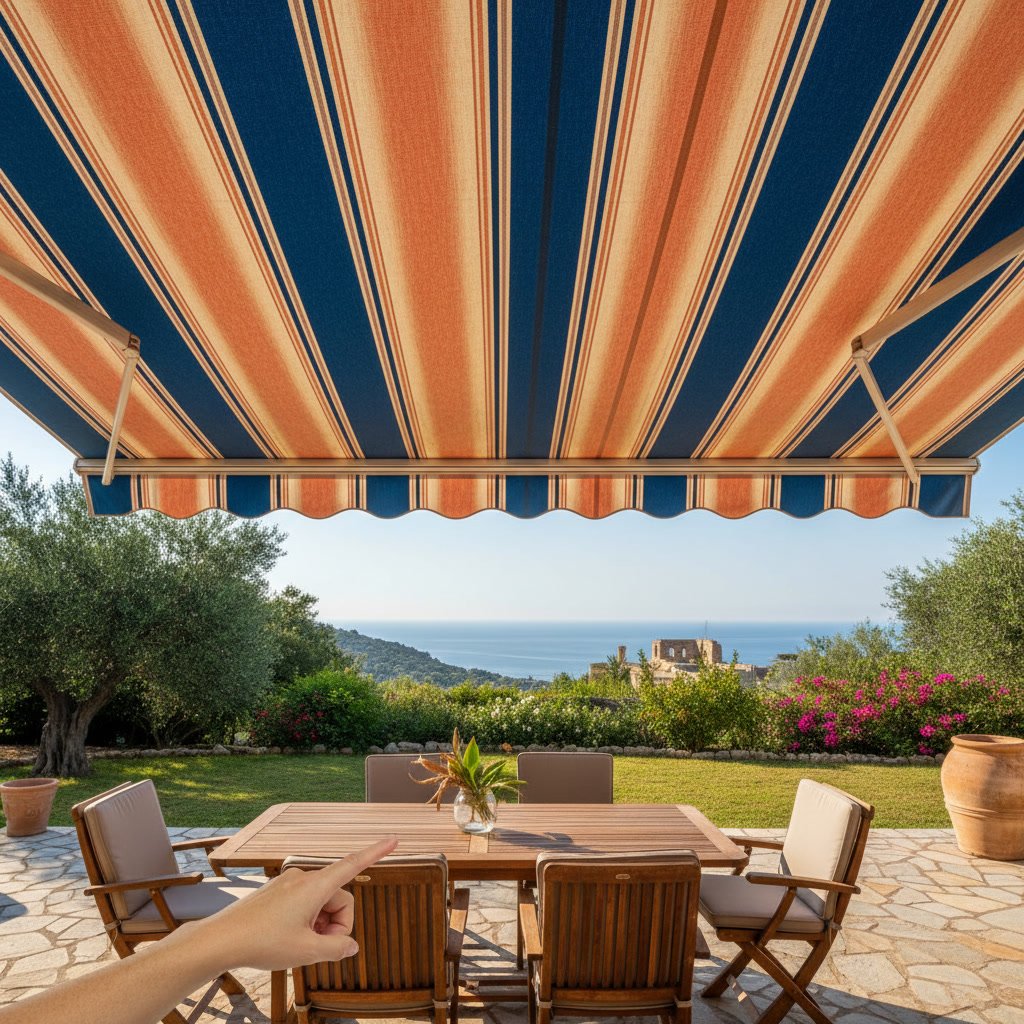
You will choose from hundreds of colors and patterns, but durability should guide the decision as much as aesthetics. Lighter colors reflect more heat but show dirt faster. Darker colors absorb heat and fade more visibly over time. Stripes hide minor stains better than solids. If your property faces south or west, pick a fabric rated for high UV exposure. If you live near the Chesapeake, consider mildew-resistant treatments and reinforced edge hems that handle wind better.
Step by Step Fabrication and Preparation
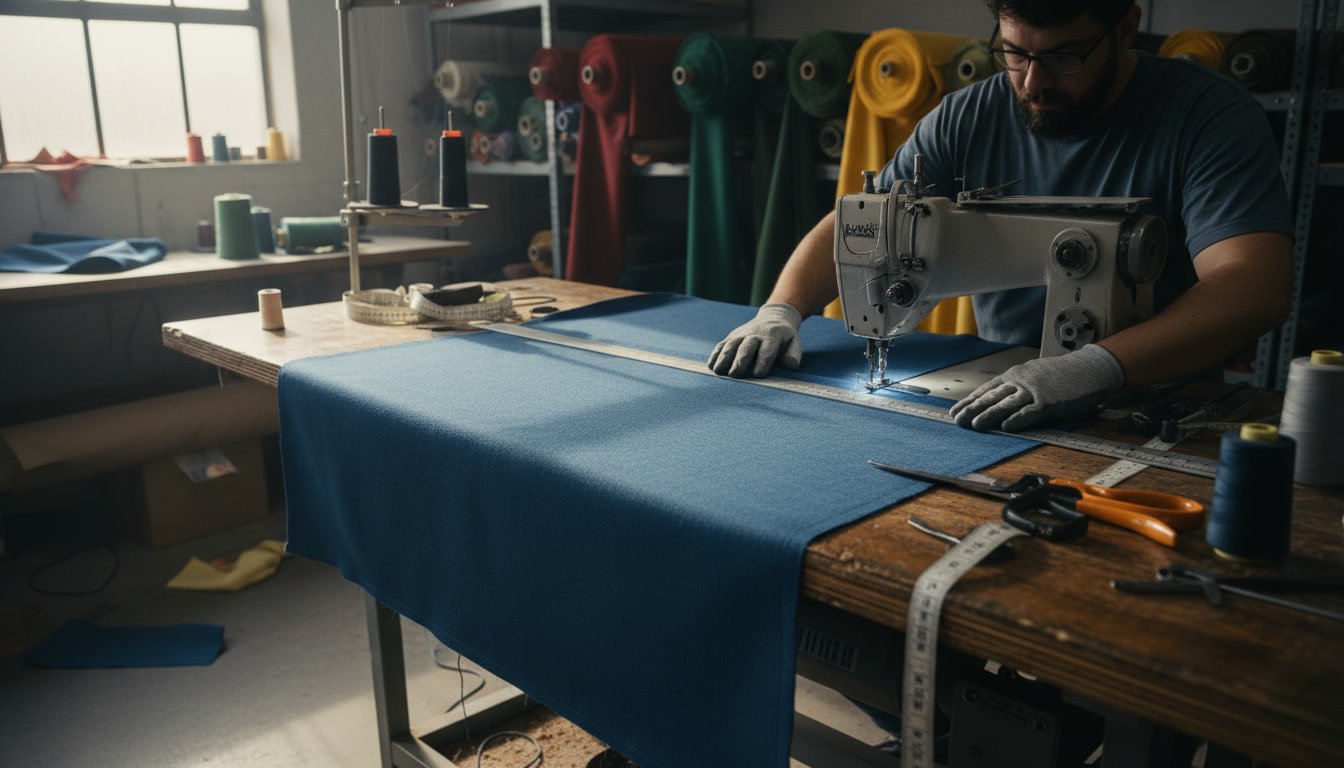
Once measurements and fabric are confirmed, the new cover is fabricated to fit your frame. This involves cutting the fabric to size, hemming all edges for strength, and sewing or welding pockets or sleeves that slide over the roller tube and front bar. For retractable awnings, the fabric includes a bolt rope or track edge that locks into the arm channels. Stationary frames may use lacing, grommets, or a keder bead system depending on the frame design.
Fabrication typically takes one to two weeks depending on the supplier and time of year. Spring and early summer are busy seasons, so lead times can stretch. Quality control includes inspecting seams, checking pocket dimensions, and confirming color accuracy before the fabric ships. A mistake at this stage means reordering and waiting again, so reputable fabricators double-check every measurement before cutting.
Removing the Old Fabric Without Damaging the Frame
The old fabric has to come off before the new one goes on. For retractable systems, this means fully extending the awning, securing the arms, and disconnecting the fabric from the roller tube and front bar. The roller tube usually has a groove or slot where the fabric edge is held by a spline or bolt rope. Removing it requires sliding out the spline or releasing tension screws. Care is taken not to bend arms or damage the motor housing during removal.
Stationary awnings may have fabric attached with screws, lacing, or clips. Each fastener is removed methodically to avoid tearing the frame or bending mounting rails. Once the old fabric is off, the frame is inspected again for any hidden damage or wear that was not visible during the initial assessment. This is also the time to clean the frame, lubricate moving parts, and tighten hardware. A clean frame makes installation easier and helps the new fabric slide into place without snagging.
Installing and Tensioning the New Fabric
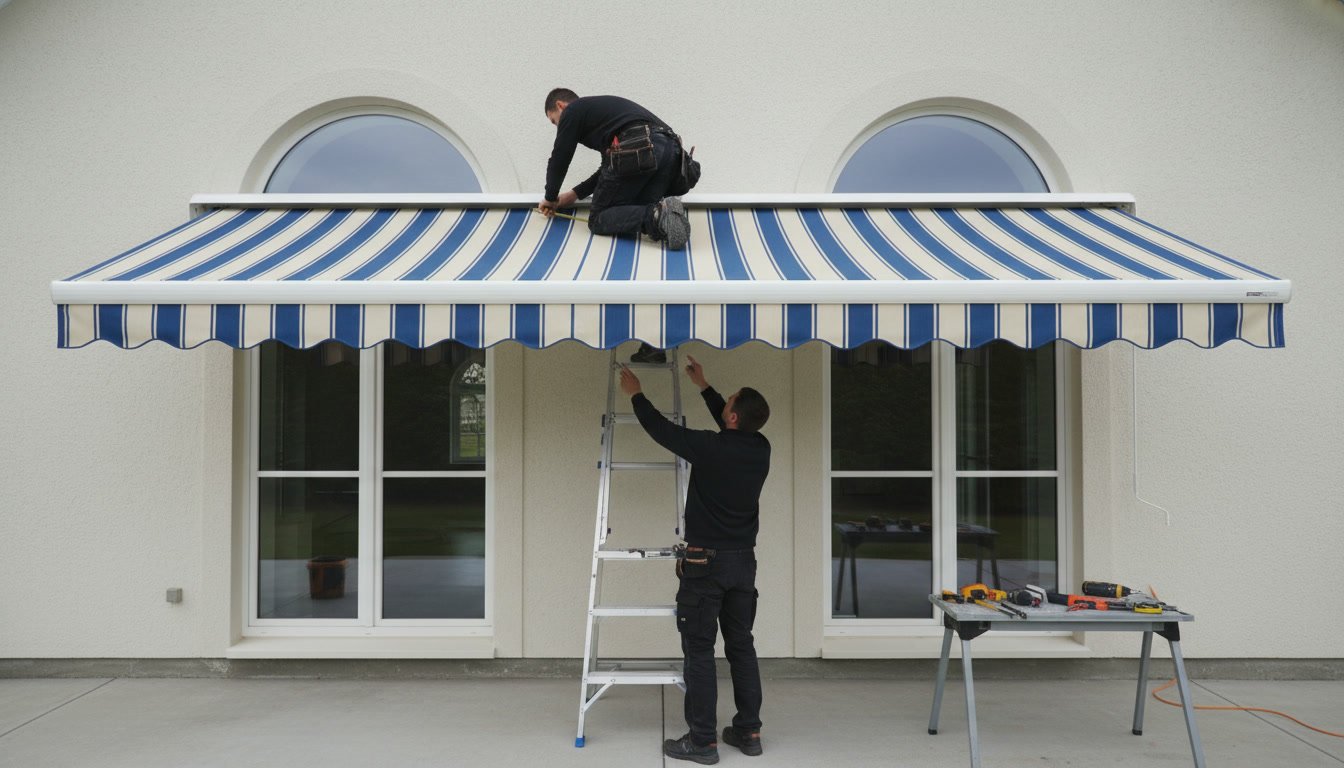
Installation begins by attaching the new fabric to the roller tube. The leading edge is inserted into the tube groove, and the fabric is rolled evenly onto the tube while keeping tension uniform across the width. If the fabric rolls on crooked, it will not extend straight or retract cleanly. Once the fabric is on the tube, the front bar is attached. The fabric pocket slides over the bar, and end caps or brackets lock it in place.
For retractable models, the bolt rope edges are fed into the arm channels. This step requires patience because the rope must seat fully without bunching. Once both sides are in, the awning is extended slowly to check alignment. Proper tension is critical. Too loose and the fabric will sag or flap in wind. Too tight and it strains the motor or bends the arms. Tension is adjusted by fine-tuning the roller tube position and checking that the fabric extends and retracts smoothly without binding.
Testing Function and Making Final Adjustments
After installation, the system is cycled through several full extensions and retractions. The installer watches for uneven rolling, fabric drift to one side, or motor strain. Adjustments are made to arm tension, limit switches, and pitch angle if needed. For motorized systems, the remote is tested to confirm that open, close, and stop commands work correctly. Wind sensors and sun sensors are recalibrated if the system includes them.
The installer also checks that the fabric sits evenly when retracted and does not rub against the housing or arms. Rubbing causes premature wear and can damage the new fabric within months. Small tweaks to mounting brackets or arm angles can eliminate contact points. Once everything operates smoothly, the homeowner is walked through proper use and care, including when to retract the awning in high wind and how to clean the fabric without voiding any warranty.
When to Replace Other Components at the Same Time
If your awning motor is showing signs of age or the manual crank feels stiff, replacing it during a fabric change makes sense. You are already paying for labor and site access, so adding a motor or gear replacement adds minimal cost compared to scheduling a separate service call later. The same applies to worn arms, damaged brackets, or faded valances. Bundling component replacements saves time and ensures the entire system is refreshed at once.
Consider upgrading to a motorized system if you currently have a manual crank. The frame is already being worked on, and the cost difference is lower than adding a motor years later. Modern motors are quieter, more reliable, and can integrate with smart home systems. If you also have stationary awnings or parts and accessories that need attention, addressing them together streamlines the project and reduces disruption.
How Weather and Timing Affect the Install Schedule
Fabric installation requires dry weather and calm wind. Rain makes fabric handling difficult, and strong wind can damage the new cover during installation. Installers watch forecasts closely and reschedule if conditions are not safe. Spring and fall offer the most reliable weather windows, but summer installs are common as long as storms are not forecast.
Scheduling also depends on fabric lead time. Stock colors and standard sizes ship faster than custom orders. If you need the awning ready for an event or peak season, plan at least four weeks ahead. Rushing an order increases the chance of errors, and last-minute installs during peak season may not be possible. Communicating your timeline upfront helps the installer coordinate fabrication and labor to meet your needs.
Getting Years More Use From a System You Already Own
Replacing the fabric breathes new life into an awning that still has years of service left in the frame and mechanics. You get the look and performance of a new system at a fraction of the cost. The process is straightforward when handled by experienced installers who understand the importance of accurate measurement, proper tensioning, and thorough testing. A well-done fabric replacement can last another decade, protecting your outdoor space and keeping it usable through the hottest months.
Awning2Go handles fabric replacement across Kent Island, Annapolis, and the surrounding areas. We measure your existing frame on site, help you choose fabric that matches your needs and environment, and install it with the attention to detail that ensures smooth operation and long service life. If your awning looks tired but the frame is still solid, you do not need a full replacement to get back the shade and comfort you are missing.
If your awning fabric has faded, torn, or no longer sheds water the way it should, reach out for a free consultation. We will assess your frame, walk you through fabric options, and give you a clear timeline and cost before any work begins. Call +14109995607 or visit our contact page to schedule your site visit.