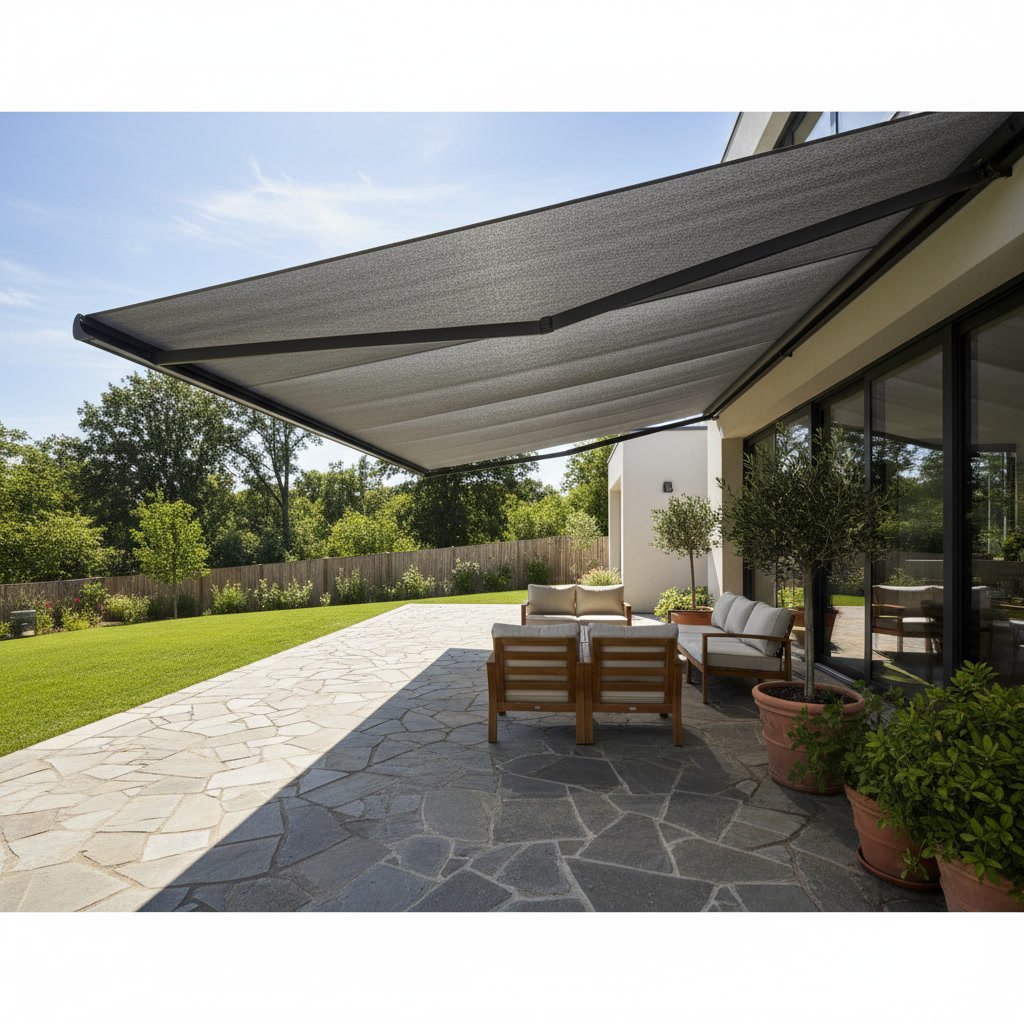
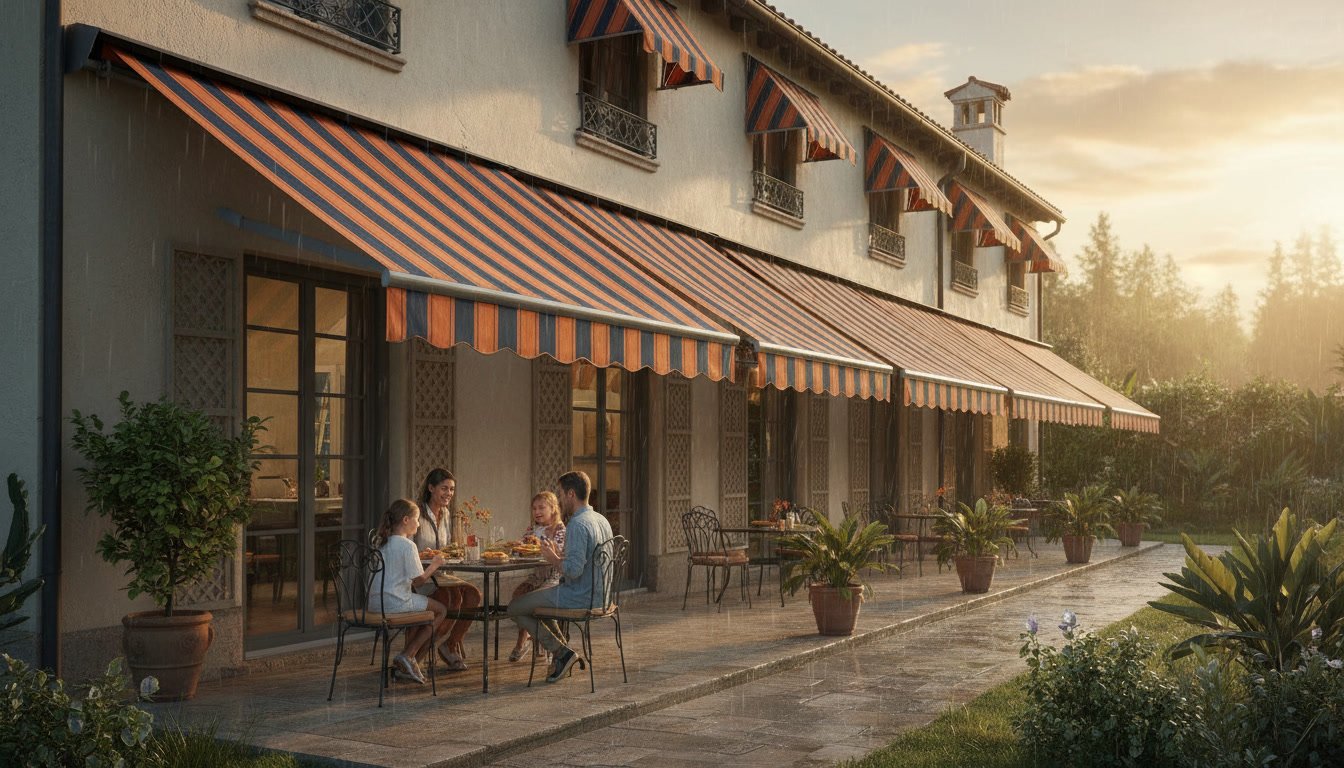
Stationary awnings are permanently mounted shade structures that provide continuous coverage over patios, decks, windows, and entryways without any moving parts. Unlike retractable systems, they stay in place through every season, blocking sun and rain year round while requiring minimal maintenance. They work best when you need consistent protection in a specific location and want a system that stands up to wind, snow, and daily exposure without operator input.
The decision to install permanent shade often comes down to how you use your outdoor space and what weather challenges you face most often. Fixed awnings solve problems that temporary or movable solutions cannot address.
Why Permanent Coverage Makes Sense for Certain Spaces
Some outdoor areas benefit more from constant protection than flexible shade. Entryways that face afternoon sun, south-facing windows that overheat rooms, and patios used daily throughout the year all perform better with a structure that stays put. When you know the sun angle and exposure pattern of a space, a permanent awning eliminates the need to extend or retract fabric based on weather.
Fixed systems also remove the mechanical components that require periodic service. There are no motors to fail, no arms to jam, and no fabric to roll and unroll hundreds of times. The simplicity of a welded or bolted frame with tensioned fabric means fewer points of failure and longer intervals between repairs.
How Fixed Awnings Handle Four Season Weather in Annapolis
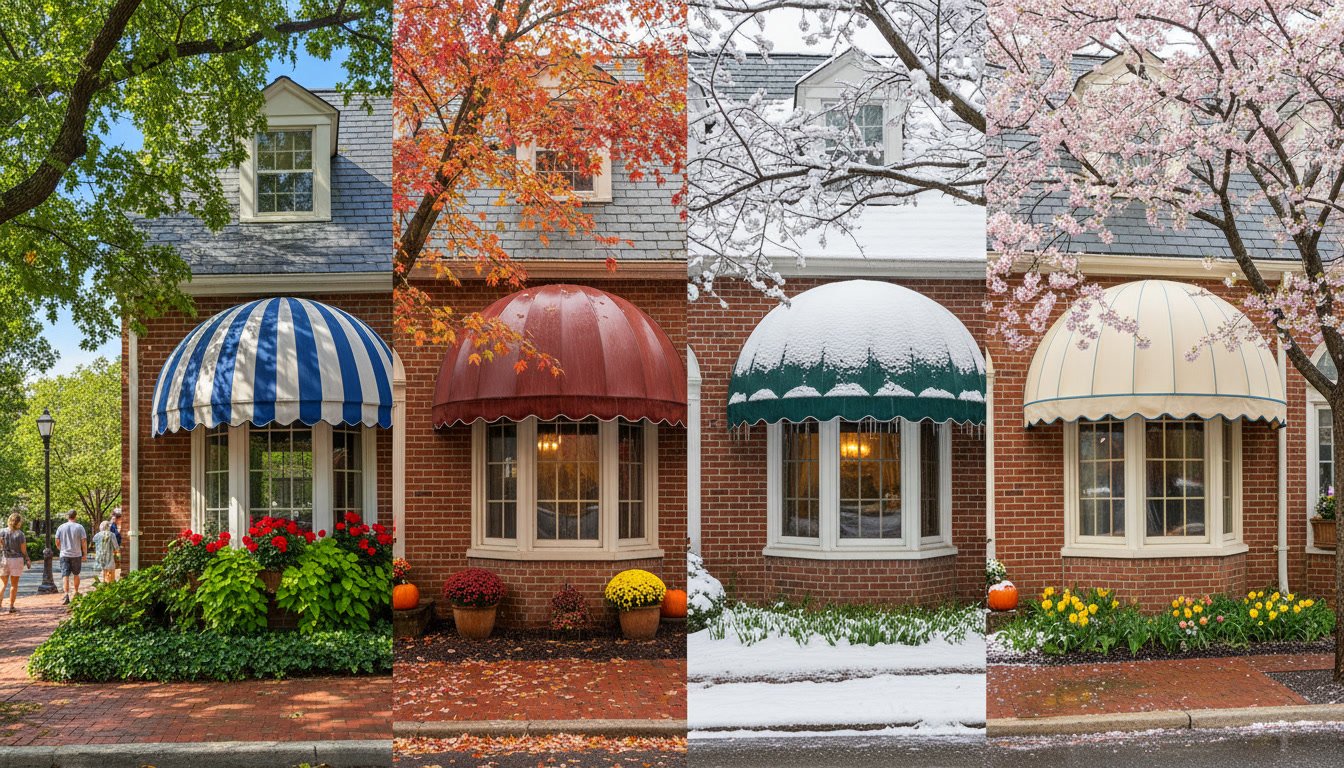
The mid-Atlantic climate presents a full range of conditions. Summers bring high UV exposure and afternoon thunderstorms. Fall and spring see heavy rain and shifting wind. Winter adds occasional snow and ice. A well-built fixed awning accounts for all of these.
Frames are typically constructed from aluminum or powder-coated steel, both of which resist rust and corrosion in humid, salt-laden air. Fabric is solution-dyed acrylic or marine-grade vinyl, materials chosen for fade resistance and water shedding. Pitch angles between 15 and 25 degrees allow rain and melting snow to run off rather than pool. In regions like Annapolis, where waterfront properties face consistent wind, awnings must be engineered to withstand sustained gusts without tearing or pulling away from mounting surfaces.
The Structural Advantages of a System That Stays Put
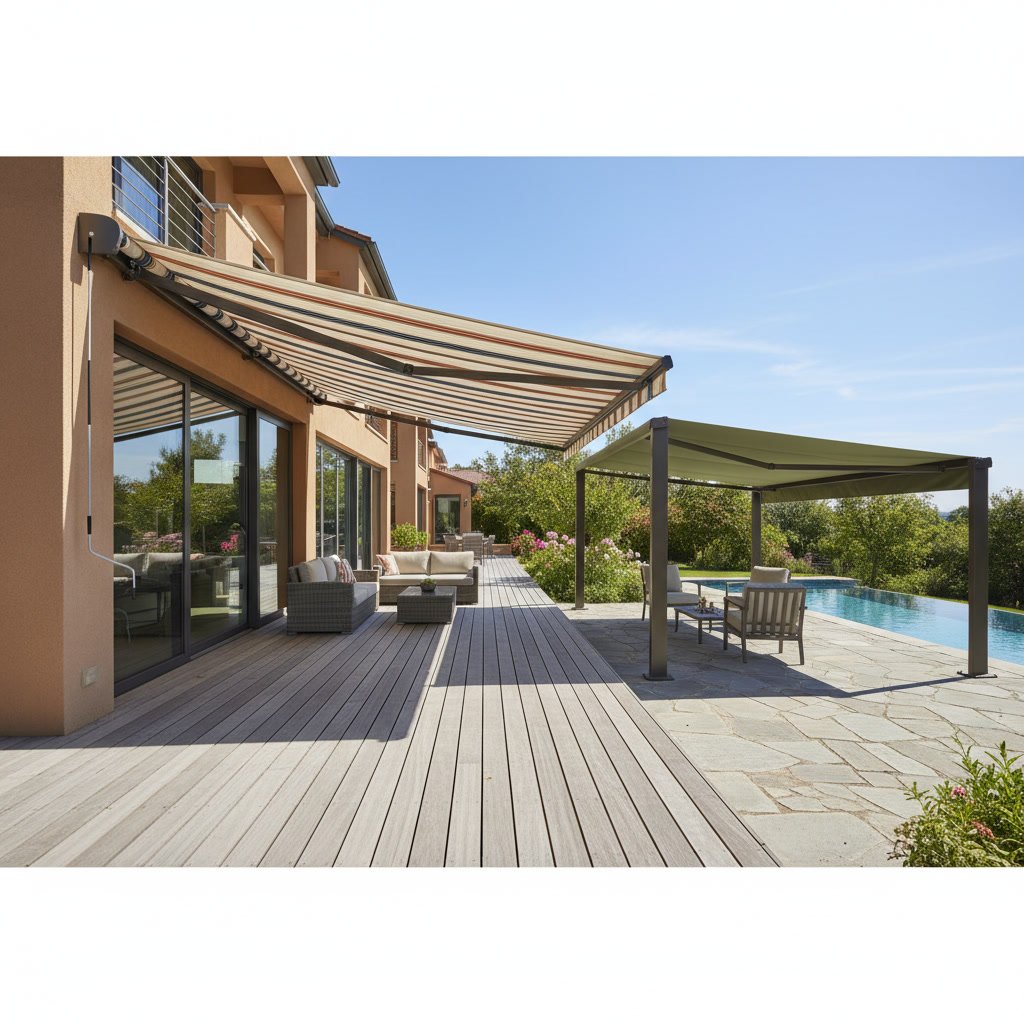
Because stationary systems do not retract, they can be built with more robust frames and deeper projections than retractable models. A fixed awning can extend eight to twelve feet from a building without the structural compromises required for fabric that rolls into a cassette. This makes them ideal for covering large patios or creating defined outdoor rooms.
Mounting is also more secure. Brackets and lag bolts attach directly to structural members, and the load is distributed across multiple fasteners. There is no lateral stress from extending arms or motors cycling on and off. Once installed, the awning becomes part of the building envelope rather than an accessory.
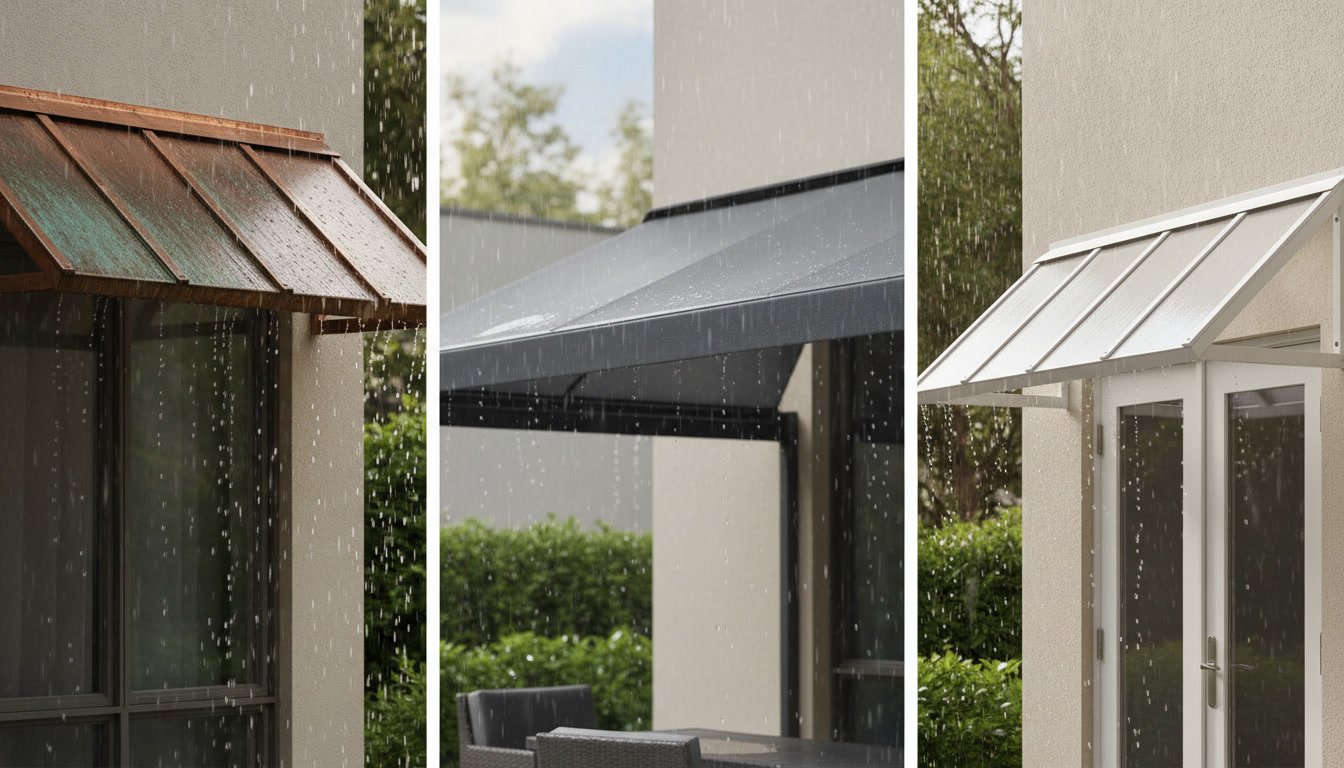
This permanence allows for heavier fabrics and integrated drainage systems. Some designs include gutters along the leading edge to channel rainwater away from doorways or seating areas, a feature rarely seen on retractable units.
Material Choices That Determine Longevity and Performance
The lifespan of a fixed awning depends heavily on fabric and frame materials. Solution-dyed acrylic fabrics hold color for 10 to 12 years under direct sun exposure, far longer than printed or coated alternatives. The dye is mixed into the fiber before it is woven, so fading occurs slowly and evenly rather than in blotches.
Marine-grade vinyl is used in high-moisture environments or where mildew is a concern. It sheds water more aggressively than acrylic and can be hosed down without absorbing moisture. However, vinyl has a shorter color life and can crack in extreme cold, making acrylic the better choice for most residential applications.
Frame finishes matter as much as fabric. Powder-coated aluminum resists corrosion better than paint and comes in colors that match trim or siding. Stainless steel hardware is standard in coastal areas where salt air accelerates rust. If you are considering other permanent shade options, pergolas and shade systems offer similar durability with different aesthetic and coverage profiles.
Where Fixed Awnings Outperform Retractable Models
Retractable awnings offer flexibility, but that flexibility comes with trade-offs. Motors, springs, and fabric rolls add complexity and cost. They also require that someone be home to extend or retract the awning before a storm, and leaving a retractable system out in high wind risks damage.
Fixed awnings eliminate these concerns. They are always deployed, always protecting, and never dependent on someone pressing a button or turning a crank. For commercial storefronts, that means consistent branding and weather protection during business hours and after. For residential decks and patios, it means you can leave furniture and cushions out without worrying about sudden weather.
If you already have a retractable system and are evaluating whether a permanent solution makes more sense, understanding how retractable awnings work helps clarify where each type excels.
Energy Savings Through Passive Solar Control
A properly positioned fixed awning reduces solar heat gain through windows and glass doors, cutting cooling costs during summer months. Studies by the U.S. Department of Energy show that awnings can reduce heat gain by up to 65 percent on south-facing windows and 77 percent on west-facing windows.
The key is matching awning projection and height to the sun angle at your latitude. In Maryland, the summer sun reaches its peak around 75 degrees above the horizon. A four-foot projection mounted eight feet above a window will block direct sun at midday while still allowing natural light. In winter, when the sun sits lower, the same awning permits sunlight to enter and warm the interior, reducing heating demand.
This passive solar control works best with stationary systems because the coverage is constant and does not rely on someone adjusting the awning daily.
Common Installation Scenarios and Mounting Requirements
Fixed awnings are installed over three main areas: windows, doors, and open patios. Each has different structural and aesthetic requirements.
Window awnings are narrow, often three to five feet wide, and mounted directly above the frame. They reduce glare and heat without blocking views. Door awnings are wider and deeper, providing shelter while entering or exiting and protecting the threshold from rain. Patio awnings are the largest, sometimes spanning 20 feet or more, and require posts or columns if the projection exceeds the capacity of wall-mounted brackets.
Mounting surface matters. Wood siding, brick, and concrete block all accept lag bolts or masonry anchors with proper pilot holes and sealant. Vinyl siding requires backing plates to distribute load, and metal siding may need reinforcement. A site assessment identifies the best attachment method before installation begins.
Maintenance Practices That Extend Service Life
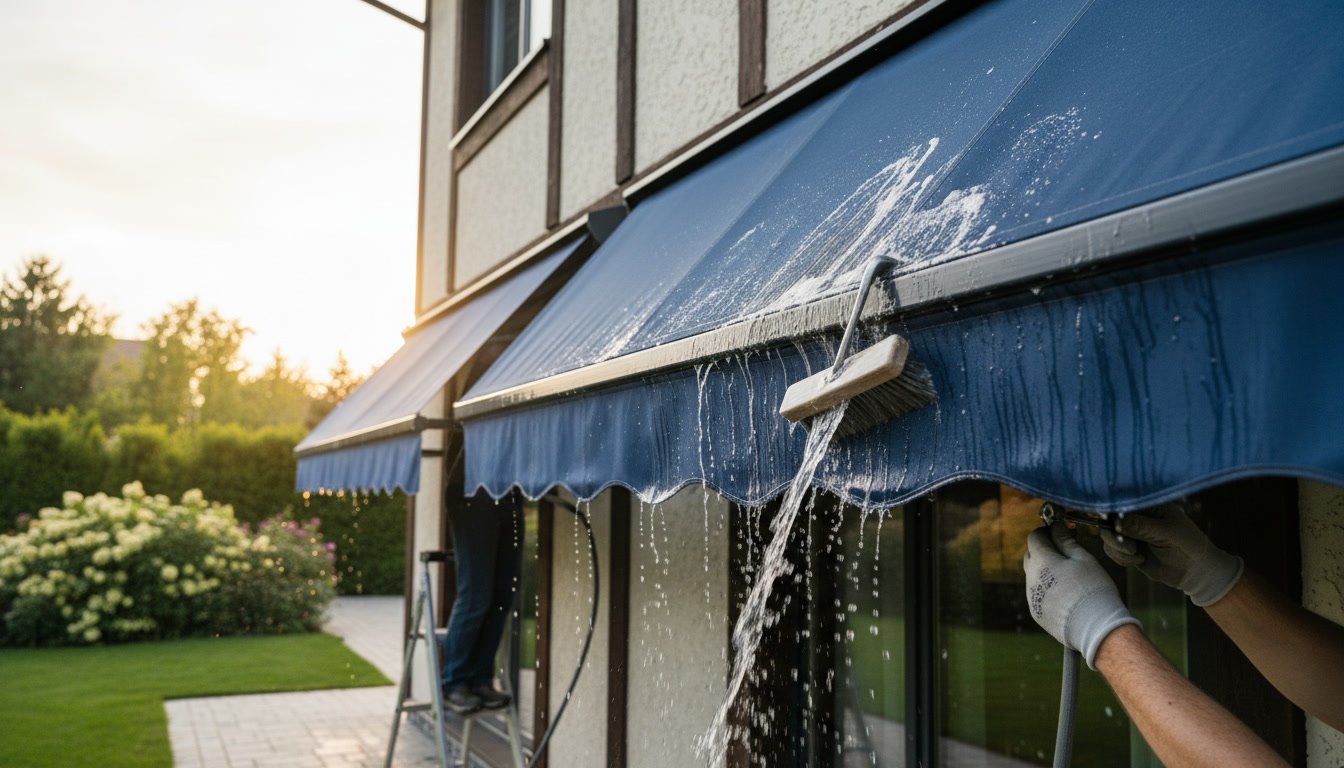
Stationary awnings require less maintenance than retractable models, but they still benefit from periodic attention. Fabric should be brushed or rinsed twice a year to remove pollen, dust, and organic debris. A mild soap solution and soft brush handle most stains without damaging the finish.
Frames should be inspected annually for loose fasteners, corrosion spots, or bent members. Tightening bolts and touching up scratches with matching paint prevents small issues from becoming structural problems. Gutters and drainage channels, if present, should be cleared of leaves and sediment to maintain water flow.
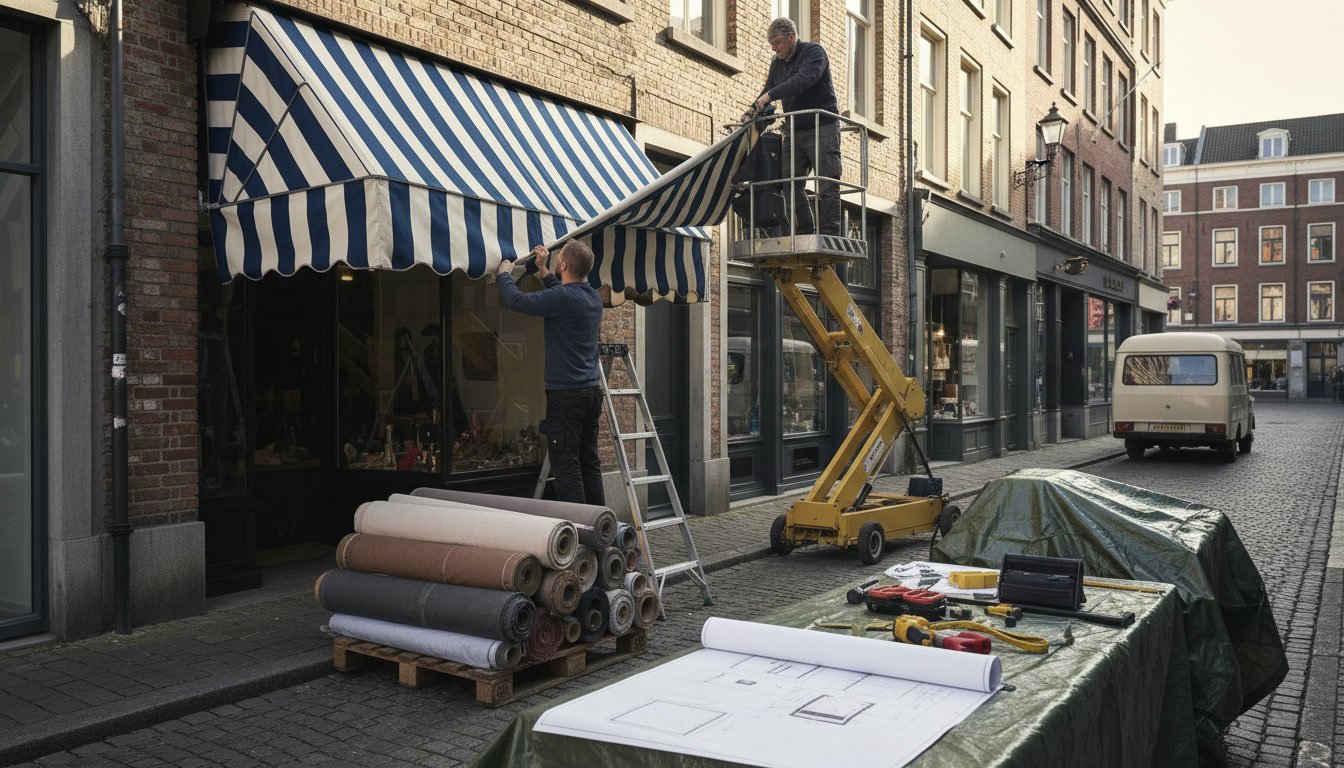
When fabric reaches the end of its useful life, replacement is straightforward. The frame remains in place, and new fabric is tensioned over the existing structure. This extends the total lifespan of the system well beyond the fabric alone. Awning2Go provides replacement fabrics and handles the re-covering process without removing the awning frame.
Design Flexibility Within a Permanent Structure
Fixed awnings come in a variety of shapes beyond the standard slope. Dome awnings curve outward, adding architectural detail to storefronts and entryways. Waterfall awnings drop vertically before angling outward, creating a dramatic profile. Concave awnings curve inward, offering a softer look that complements traditional architecture.
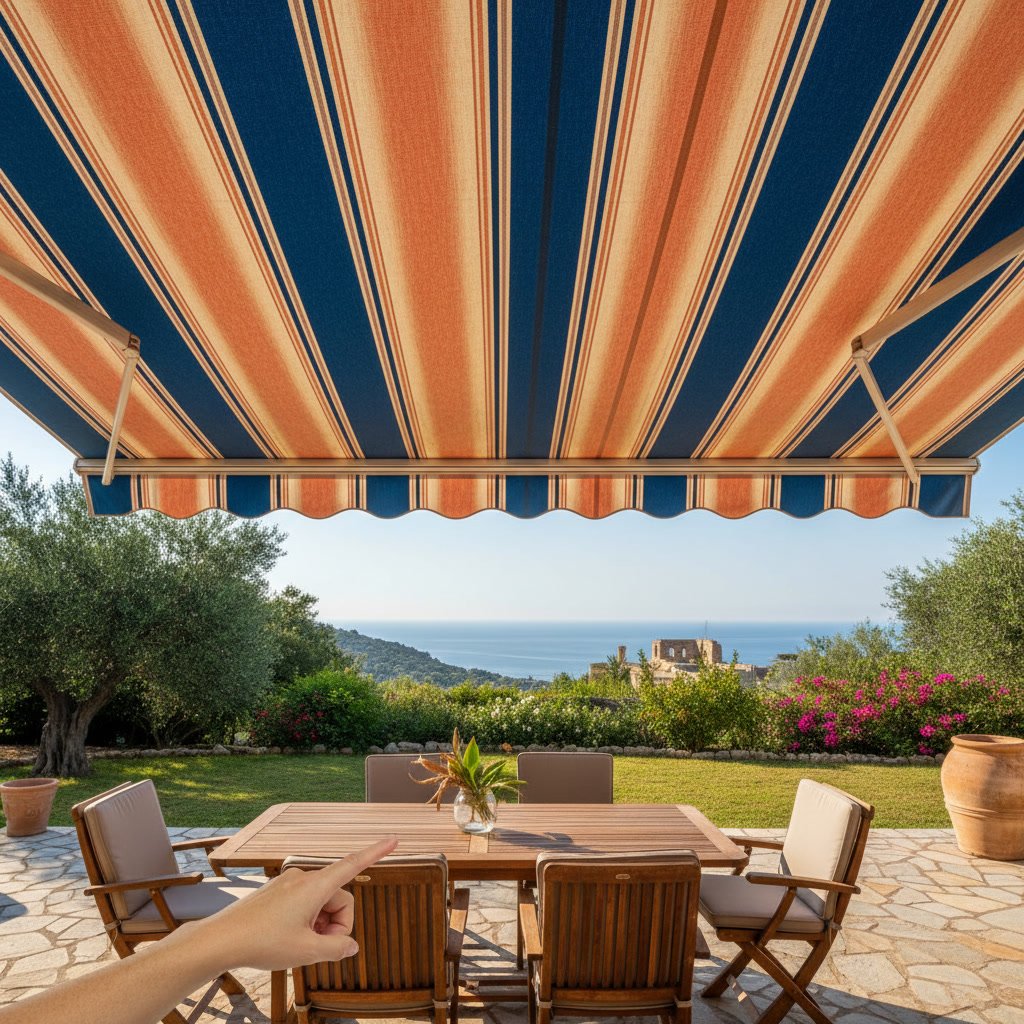
Fabric options include solids, stripes, and patterns in hundreds of color combinations. Valances can be straight, scalloped, or custom cut to match building trim. The awning becomes a design element as much as a functional one, enhancing curb appeal while serving a practical purpose.
For properties where multiple shade structures are desired, combining fixed awnings with stationary awnings over different areas creates visual cohesion and consistent coverage throughout outdoor spaces.
Choosing the Right Projection and Coverage Area
Projection is the horizontal distance the awning extends from the building. Standard projections range from two to eight feet, but custom builds can reach 12 feet or more with added support. The right projection depends on the width of the area you want to shade, the height of the mounting point, and the angle of the sun.
A common formula is to project the awning two-thirds of the vertical drop. If the awning is mounted nine feet above the ground, a six-foot projection provides balanced coverage without creating a tunnel effect. Deeper projections shade more area but can make spaces feel enclosed.
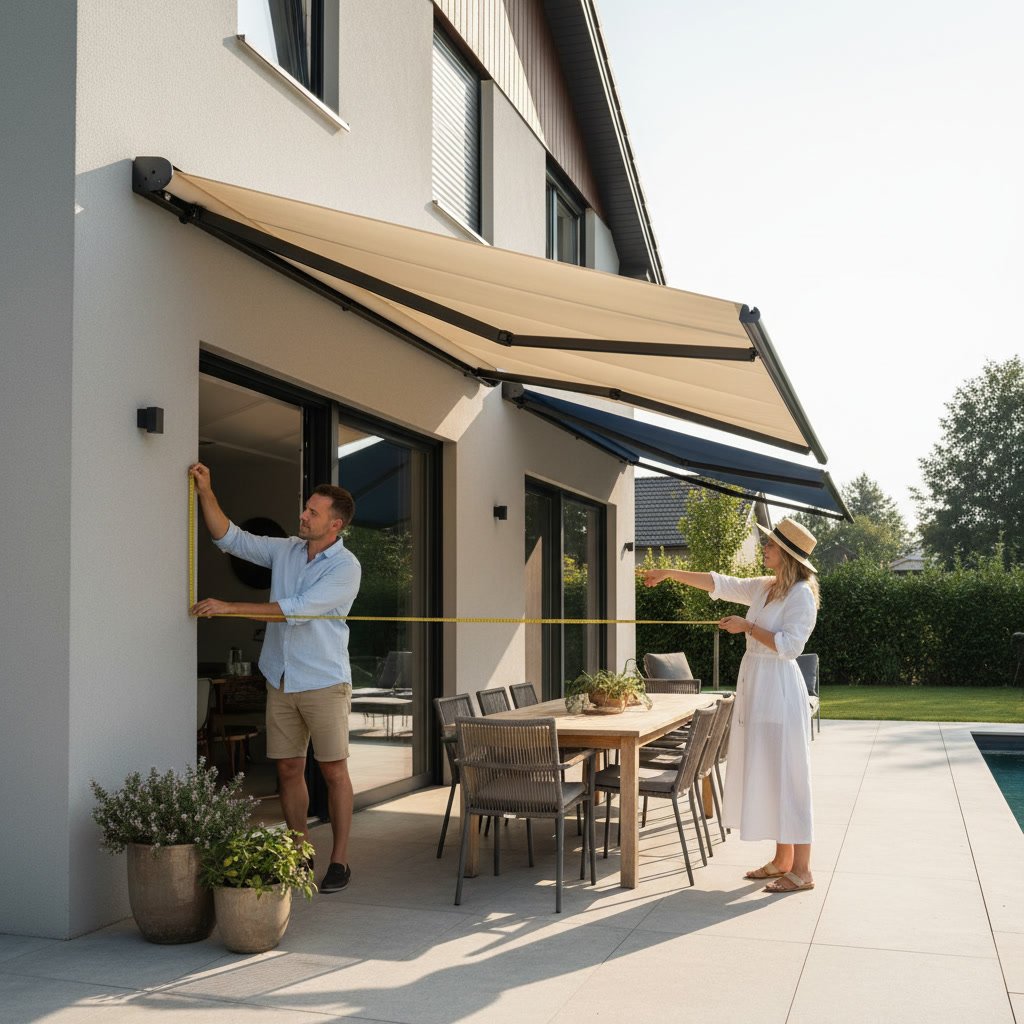
Coverage area should account for furniture, walkways, and the path of the sun throughout the day. Measuring the space during peak sun hours shows where shadows fall and where additional coverage is needed.
Making Permanent Shade Work for Your Property
Fixed awnings deliver reliable, low-maintenance protection for outdoor spaces that face consistent sun and weather exposure. They eliminate the complexity of retractable systems, provide energy savings through passive solar control, and last for decades with basic upkeep. When you know how you use a space and what conditions it faces, a permanent awning is often the most practical solution.
Awning2Go installs stationary awnings throughout the Eastern Shore, helping property owners create outdoor spaces that stay comfortable year round. Every installation is custom measured and built to handle the wind, sun, and weather patterns specific to your location. Reach out for a free consultation to discuss your space and see what options fit your needs. Call +14109995607 or visit our contact page to schedule a site visit.