
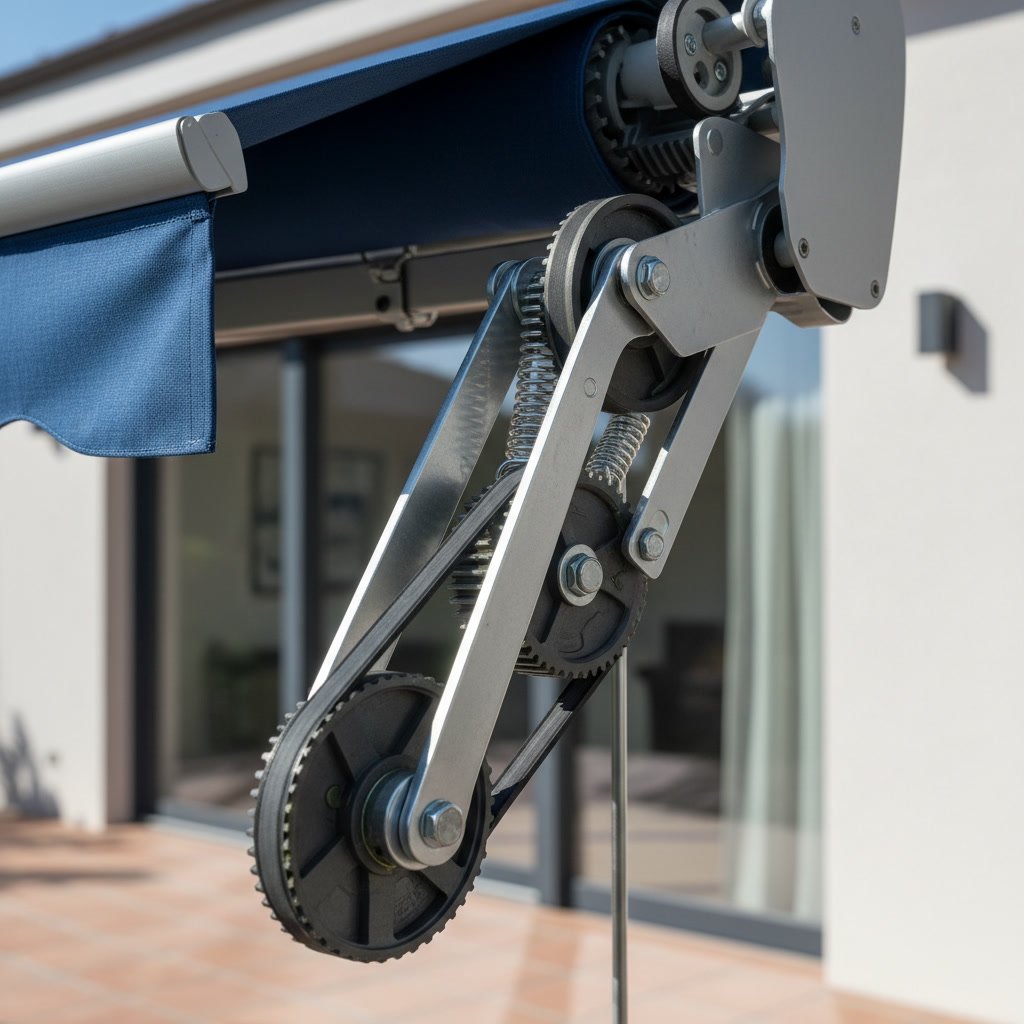
Retractable awnings operate through a combination of tension arms, a rolling barrel, and either manual cranks or motorized systems that wind fabric in and out. The key mechanism relies on spring-loaded lateral arms that maintain consistent tension on the fabric while supporting its weight as it extends outward. When you understand how retractable awnings work, you can make better decisions about operation, maintenance, and which type suits your outdoor space best.
Most homeowners consider retractable awnings for their flexibility, but few understand the engineering that makes them reliable season after season. The system balances mechanical advantage, material science, and weather resistance in a compact design that mounts to your home’s exterior wall.
Why Retractable Designs Differ from Fixed Structures
Fixed awnings attach permanently to a building and cannot move. They provide constant shade but leave you no control over sunlight or weather exposure. Retractable systems solve this limitation by allowing you to adjust coverage based on immediate conditions.
The retractable design adds mechanical complexity but delivers practical advantages. You can retract the awning during high winds, protecting the fabric and frame from damage. On cooler days, you gain access to natural sunlight and warmth. This flexibility extends the lifespan of your investment because the fabric spends less time exposed to UV rays and precipitation.
The Core Components That Make Extension Possible
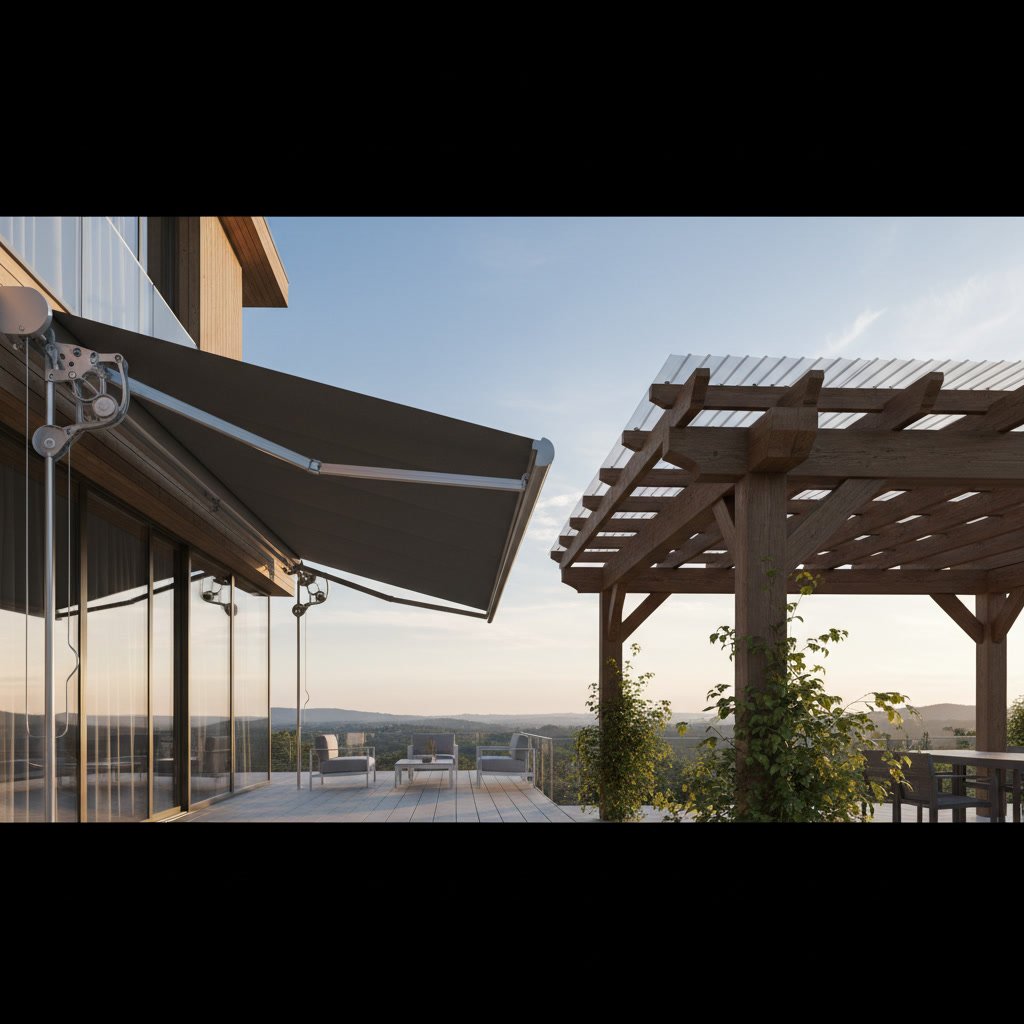
Every retractable awning contains four essential parts that work together. The rolling barrel sits at the mounting point and stores the fabric when retracted. Lateral arms extend from the barrel to the front bar, creating the support structure. The front bar weights and stabilizes the leading edge of the fabric. The mounting brackets anchor everything to your wall or soffit.
Spring cartridges inside the lateral arms provide the tension that keeps fabric taut. These springs compress as the awning extends and release stored energy during retraction, assisting the movement in both directions. Without proper spring tension, the fabric would sag and catch wind like a sail, creating dangerous loads on the mounting points.
Manual Operation Through Gear Systems
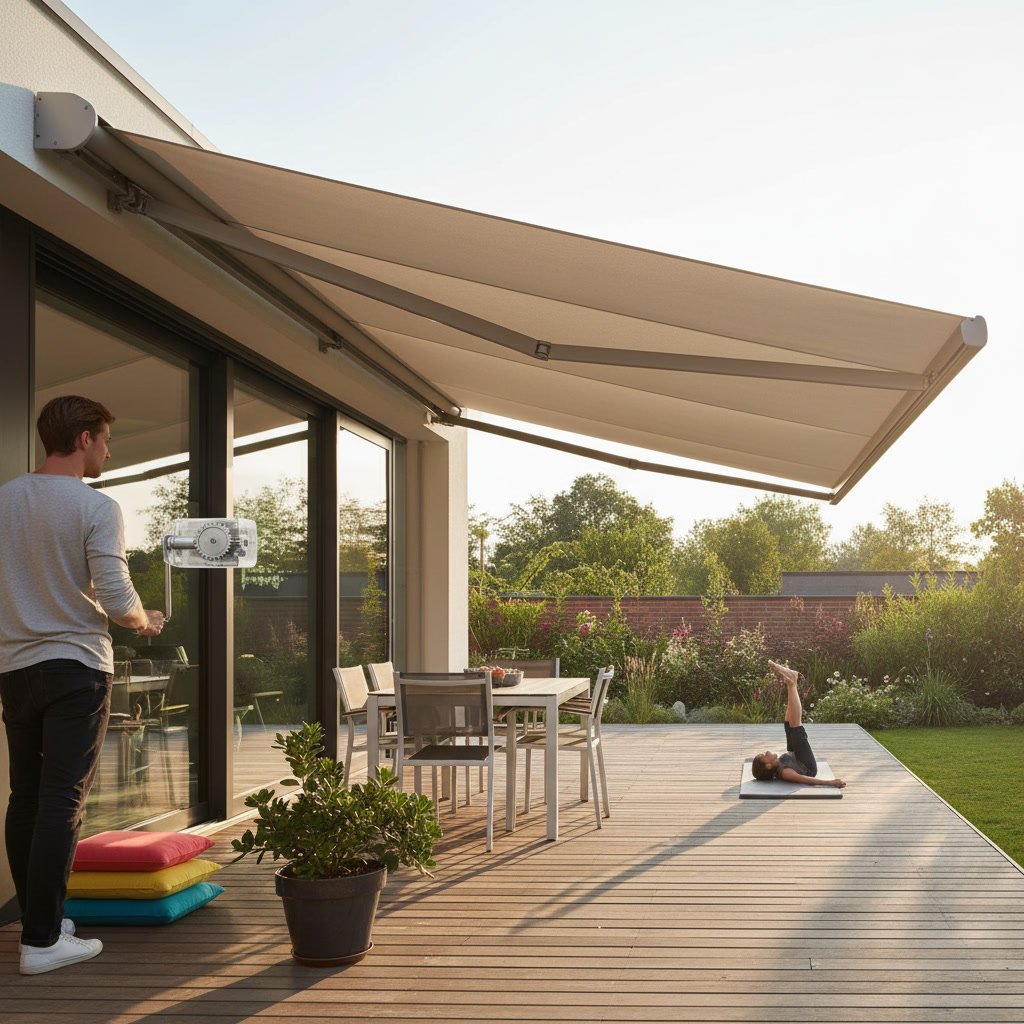
Manual retractable awnings use a hand crank connected to the rolling barrel through a gear reduction system. Turning the crank rotates a small gear that engages a larger gear on the barrel. This mechanical advantage reduces the effort needed to roll heavy fabric.
The gear ratio typically ranges from 4:1 to 8:1, meaning four to eight crank rotations produce one full barrel rotation. A 12-foot awning with 10-foot projection requires roughly 30 to 50 crank turns to fully extend or retract. The crank handle often features a removable design to prevent unauthorized operation or accidental deployment in high winds.
Motorized Systems and Their Control Methods in Annapolis Homes
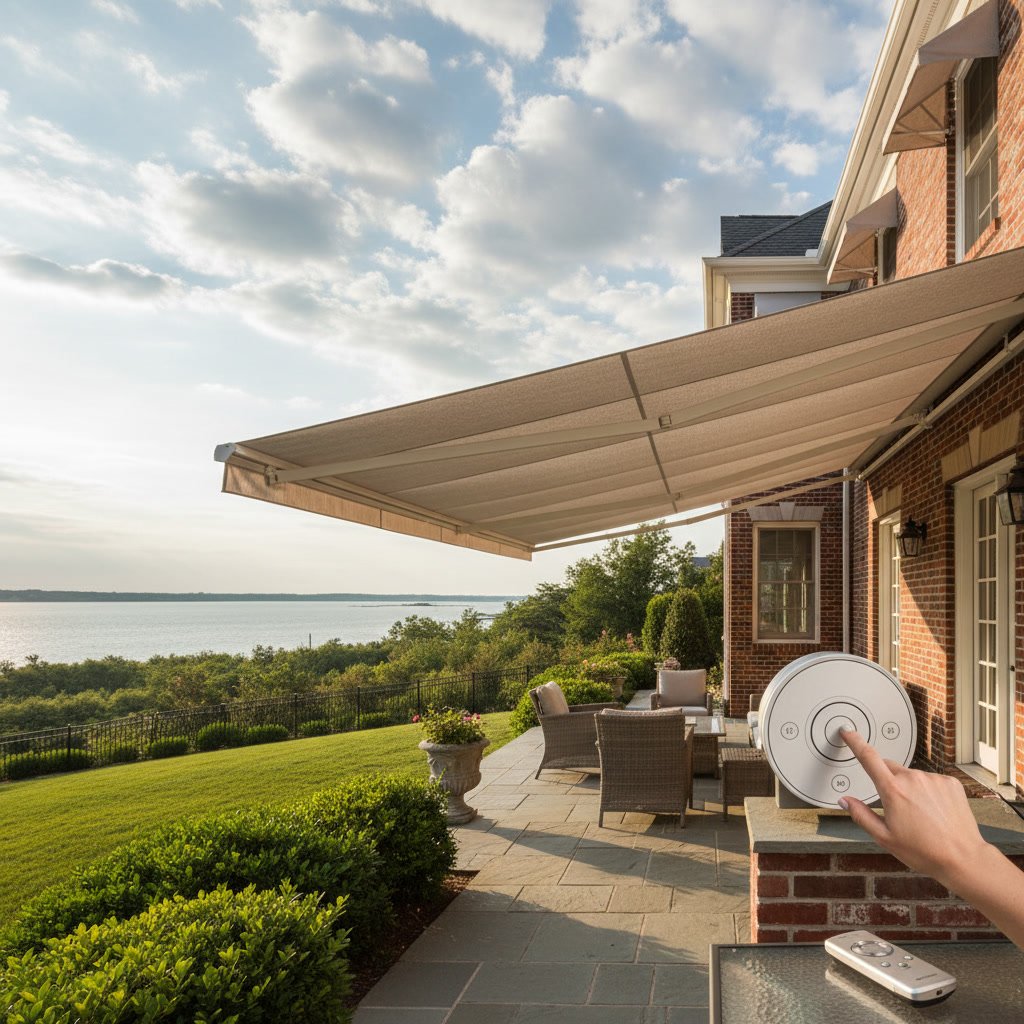
Electric motors replace the manual crank with a tubular motor housed inside the rolling barrel. These motors receive power through a standard electrical connection and respond to wall switches, remote controls, or smartphone apps. The motor turns the barrel directly, eliminating gears and hand effort.
Most motors operate on standard 120-volt household current, though some larger commercial units require 240 volts. The motor’s torque rating must match the awning size and fabric weight. An undersized motor will struggle and fail prematurely, while an oversized motor can damage the arm springs by extending too forcefully.
Advanced systems integrate wind sensors and sun sensors that automatically retract or extend the awning based on weather conditions. These sensors protect your investment when you’re away from home, retracting before damaging winds arrive. Many homeowners in Annapolis appreciate this feature during summer storm season when afternoon thunderstorms develop quickly.
Step-by-Step: What Happens When You Extend an Awning
The extension sequence follows a precise mechanical order. First, the motor or crank begins rotating the barrel. As the barrel turns, fabric unrolls and the front bar moves away from the wall. Simultaneously, the lateral arms begin to unfold from their stored position.
The arm springs compress under load as they push the front bar outward. This compression stores energy that will assist retraction later. The fabric maintains tension throughout extension because the springs pull the arms inward while the barrel pushes fabric outward, creating opposing forces that eliminate slack.
The system reaches full extension when the arms achieve their maximum angle, typically between 10 and 35 degrees from horizontal depending on the mounting height and projection distance. At this point, a limit switch in motorized units stops the motor, or increased resistance signals a manual operator to stop cranking.
The Retraction Process and Safety Features
Retraction reverses the extension process but benefits from stored spring energy. The motor or crank reverses barrel rotation, winding fabric back onto the tube. The compressed arm springs release their stored energy, helping to pull the front bar back toward the wall.
This spring assistance reduces motor load and makes manual retraction easier than extension. Quality systems retract smoothly without jerking or fabric bunching. Poor spring calibration causes uneven fabric roll-up, creating wrinkles and stress points that reduce fabric life.
Safety features prevent operation errors. Motorized units include thermal overload protection that shuts down the motor if it overheats from excessive use or mechanical binding. Limit switches prevent over-extension that could damage arms or rip fabric. Some systems add obstacle detection that stops and reverses if the awning encounters unexpected resistance during operation.
Pitch Adjustment and Its Effect on Performance
The mounting brackets allow pitch angle adjustment, typically from 5 to 40 degrees. This angle determines how steeply the awning slopes downward from the wall. Steeper pitches shed rain more effectively and reduce standing water that can stretch fabric or stress seams.
Pitch also affects shade coverage. A steeper angle provides more vertical shade close to the wall, blocking low-angle morning or evening sun. A shallower pitch extends horizontal coverage farther from the building but allows more vertical sun penetration.
Professional installers evaluate your wall height, desired coverage area, and typical sun angles to recommend optimal pitch. Adjusting pitch after installation requires loosening mounting brackets and changing the angle, a task best left to experienced technicians to maintain structural integrity and warranty coverage.
Fabric Characteristics That Enable Rolling
Not all outdoor fabrics work for retractable awnings. The material must resist creasing when rolled tightly around a barrel for extended periods. Solution-dyed acrylic remains the most popular choice because it holds color without fading and resists mildew growth even when stored slightly damp.
Fabric weight affects operation speed and motor requirements. Lighter fabrics (around 8 to 9 ounces per square yard) roll and unroll quickly with less motor strain but may flutter in moderate winds. Heavier fabrics (10 to 12 ounces) provide better wind stability and longer lifespan but require more powerful motors and stronger arm springs.
The fabric edge hems contain a rope or cord sewn into the edge that slides into grooves on the front bar and sometimes the barrel. This rope-and-groove connection keeps fabric aligned during operation and prevents edge fraying. Proper hem tension prevents fabric from pulling loose during extension.
Common Mechanical Issues and Their Causes
Most operational problems trace to spring tension imbalance. If one arm’s spring weakens before the other, the awning extends unevenly, creating diagonal wrinkles in the fabric. This imbalance also stresses the barrel and can cause premature motor failure in electric units.
Fabric bunching during retraction indicates improper barrel alignment or debris buildup in the fabric groove. The barrel must remain perfectly parallel to the wall throughout its length. Even a few degrees of twist causes fabric to migrate toward one end as it rolls.
Motor failures often result from excessive wind operation rather than motor defects. Operating a motorized awning in winds above 20 to 25 mph creates loads the system wasn’t designed to handle. The motor draws excessive current, overheats, and burns out. Manual systems suffer bent arms and stretched fabric under the same conditions.
Maintenance Practices That Ensure Reliable Operation
Routine maintenance focuses on keeping moving parts clean and properly adjusted. Remove debris from arm joints and barrel ends at least twice yearly. Leaves, pollen, and dirt create friction that resists smooth operation and accelerates wear.
Lubricate moving joints with silicone spray or light machine oil annually. Avoid heavy greases that attract dirt or drip onto fabric. Apply lubricant sparingly to pivot points where arms connect to brackets and where they attach to the barrel.
Inspect fabric tension and alignment before each season of heavy use. Fabric should roll evenly across the entire barrel width without bunching. Check mounting brackets for looseness caused by house settling or thermal expansion. Tighten hardware before minor looseness becomes structural movement that damages your siding.
An expert tip most homeowners miss: always retract your awning completely dry. Even mildew-resistant fabric develops odors and premature degradation when stored wet repeatedly. If rain catches your awning extended, retract it temporarily for weather protection, then extend it again when conditions clear to allow complete drying before final retraction.
Making the Most of Your Outdoor Shade Investment
Understanding the mechanics behind retractable awnings helps you operate them correctly and recognize problems before they cause expensive damage. The interplay between springs, fabric, barrel, and motor creates a reliable system when properly maintained and operated within design limits.
These systems perform best when you respect wind speed limitations, keep components clean, and address minor issues promptly. Proper operation extends fabric life, reduces motor strain, and maintains the smooth function that makes retractable awnings valuable additions to outdoor living spaces.
Awning2Go serves the greater Annapolis area with professional installation, maintenance, and repair services for all types of retractable shade systems. Whether you need a new motorized awning, spring adjustment on an existing manual system, or expert advice on the right solution for your home, experienced technicians are ready to help. Call +14109995607 to discuss your project and schedule a consultation.